
Bare dirt under the floor
If the crawl space floor is open dirt, the ground can keep giving off moisture into the space under your house. A sealed cover holds it down at the soil.
Damp dirt or a musty smell under the house? We cover the crawl space floor and seal the plastic up the walls and piers.
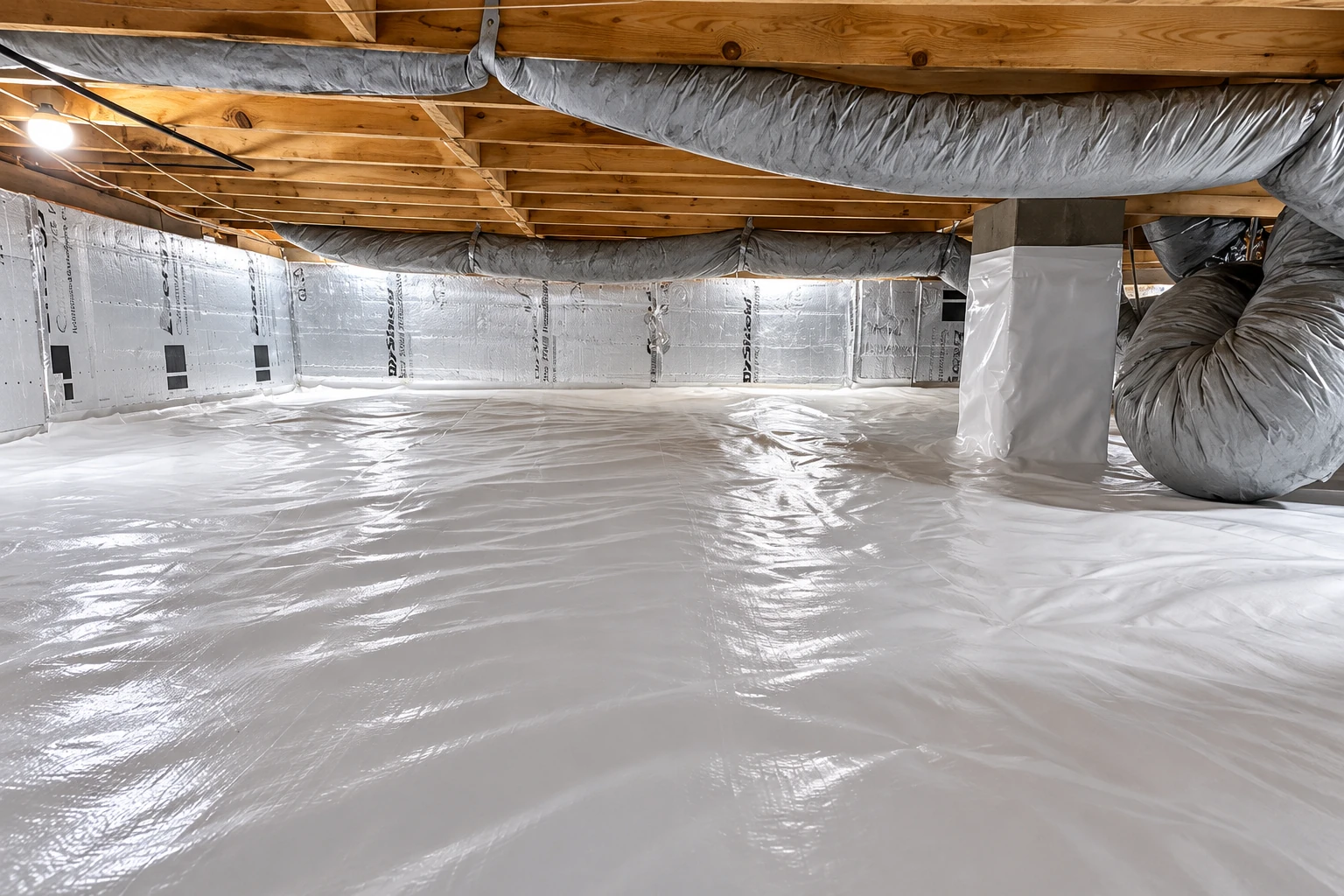
Vapor barrier installation in Hesperia means laying heavy plastic over the dirt floor of your crawl space and sealing it to the walls and piers, so water and water vapor from the ground stay out of the space under your floors.
Most calls start with a musty smell, cold floors or a look through the hatch at bare, damp dirt. A ground cover handles what comes up from the soil. It's one piece of keeping the space under your house dry, not the whole fix.
The price moves with the size of the floor, how many piers we wrap, how tight the access is and how much has to come out before we can lay anything. The schedule mostly turns on whether there's water or mold to deal with first, because we won't seal plastic over a problem. I look at the space myself before I put a price on paper.
Plastic laid over a leak or a soggy spot just hides it. We deal with what's wrong first and then cover the floor, so you're not paying to cover up a problem.
I'm the one who comes out to look at your crawl space and write the estimate. Our own crew does the install, and I check the work before we leave.
If your crawl space is dry and the floors above it are fine, I'll say so. Sometimes the honest answer is that you don't need us yet, and that's worth knowing.
Once the floor is clear, we roll out the plastic, lap the seams over each other and run the edges up the foundation walls and around every pier. Then we fasten it, so the whole floor is covered and no bare dirt shows. The edges are where ground moisture slips back in, so that's where we spend the time.
If you think there's mold down there, tell us before we start. We'd rather plan around it than find it halfway through, and I'll go over what it changes when I'm out for the estimate.
A ground cover takes care of what comes up from the soil, not air leaking through the house. If your floors stay cold or the upstairs runs hot, attic air sealing and retrofit insulation for the walls and floors you already have are usually where I'd look next, and I'll tell you which of those can wait.
If the crawl space floor is open dirt, the ground can keep giving off moisture into the space under your house. A sealed cover holds it down at the soil.
If you're adding crawl space insulation, the ground cover should go in first, so the new insulation isn't sitting over damp soil. We can plan both jobs together.
Older covers get torn by foot traffic, pulled loose at the walls or cut short of the edges. We take out what's failed and replace it with a full cover.
We're based in Hesperia and do this same work in Victorville, Apple Valley, Phelan and the other cities around it, with our own crew on every job.
Send the form and we'll reply within one business day to set up a visit. I come out, look at the crawl space myself and give you a written price, with no obligation.
Let us know if you see vents in the foundation walls around the house. It's one of the first things I look at, and knowing ahead helps me plan the visit.
Standing water, damp dirt, stains on the foundation or a musty smell all matter. Water gets dealt with before the plastic goes down, so I want to know what to look for.
Boxes, old lumber and debris have to come out so the cover can reach every part of the floor. Tell us what's there so we can plan who clears it.
These photos show plastic ground covers, lapped seams and edges run up foundation walls and piers, so you can point at what you'd like.
Here are the questions Hesperia homeowners ask us about ground covers, water, radon, permits and who's allowed to do the work.
Yes. Federal building guidance says the plastic ground cover belongs in a crawl space whether it's vented or unvented, so vents in the foundation walls don't replace it. If you're still deciding whether to keep the vents open or close the space up, plan on a full, sealed ground cover either way. We'll go over the rest at the estimate.
No, not if water is getting in. In vented crawl spaces, most moisture comes from water entering through poor grading, missing drainage around the house or how the yard gets watered. Before the plastic goes down, check which way your yard slopes, where the downspouts drain and whether sprinklers soak the foundation. I'll point out what I see when I'm under the house.
It can help. Federal guidance says a well-installed ground cover helps keep down both ground moisture vapor and soil gases such as radon. The key word is well-installed, because a cover with gaps at the edges or bare dirt showing does less, so full coverage is worth paying for. That's why we fasten ours at every wall and pier.
The city's Building & Safety Division issues building permits, which are needed before construction or remodeling begins. Its list names electrical and mechanical work, not vapor barriers, so ask the division about your job. Only you, your licensed contractor or your authorized agent can get the permit. When a job calls for one, we handle the paperwork and set up the city's inspections.
Only a small one. The dollar limit on California's minor work exemption went from $500 to $1,000, and it applies only when the job needs no permit and the worker employs no one. Past that, the work needs a licensed contractor. We're licensed and fully insured, so you don't have to sort that out with us.
Not always. Extension guidance from North Carolina says to keep humidity down and to consider a dehumidifier when it runs high. That's general advice, not a Hesperia rule, but a humidity reading after the cover goes in is a fair way to judge whether the plastic alone is doing enough for your house.
Call (760) 713-8598 any day from 7 AM to 11 PM, or send the form and tell us what you've seen under the house.