
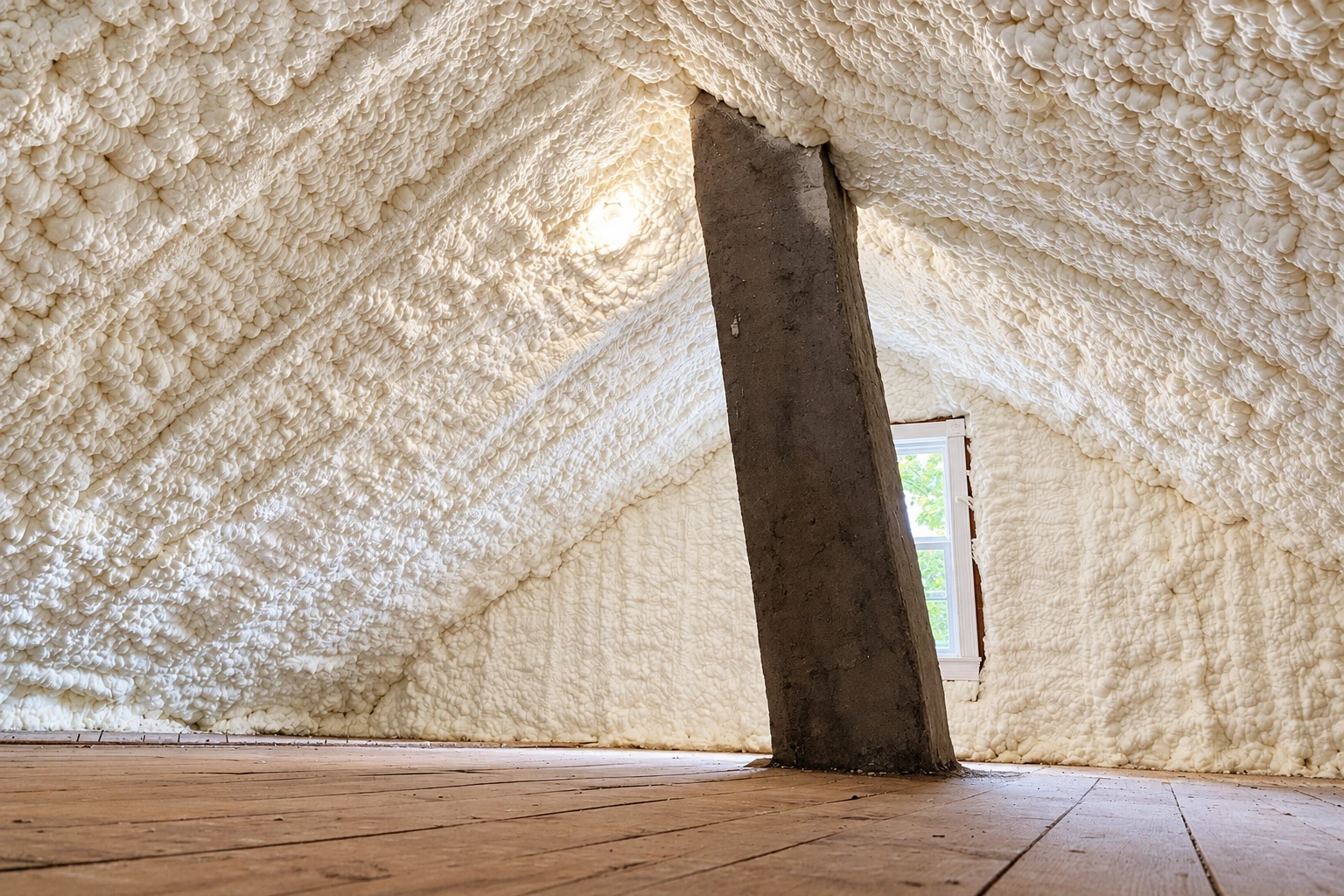
Spray foam insulation
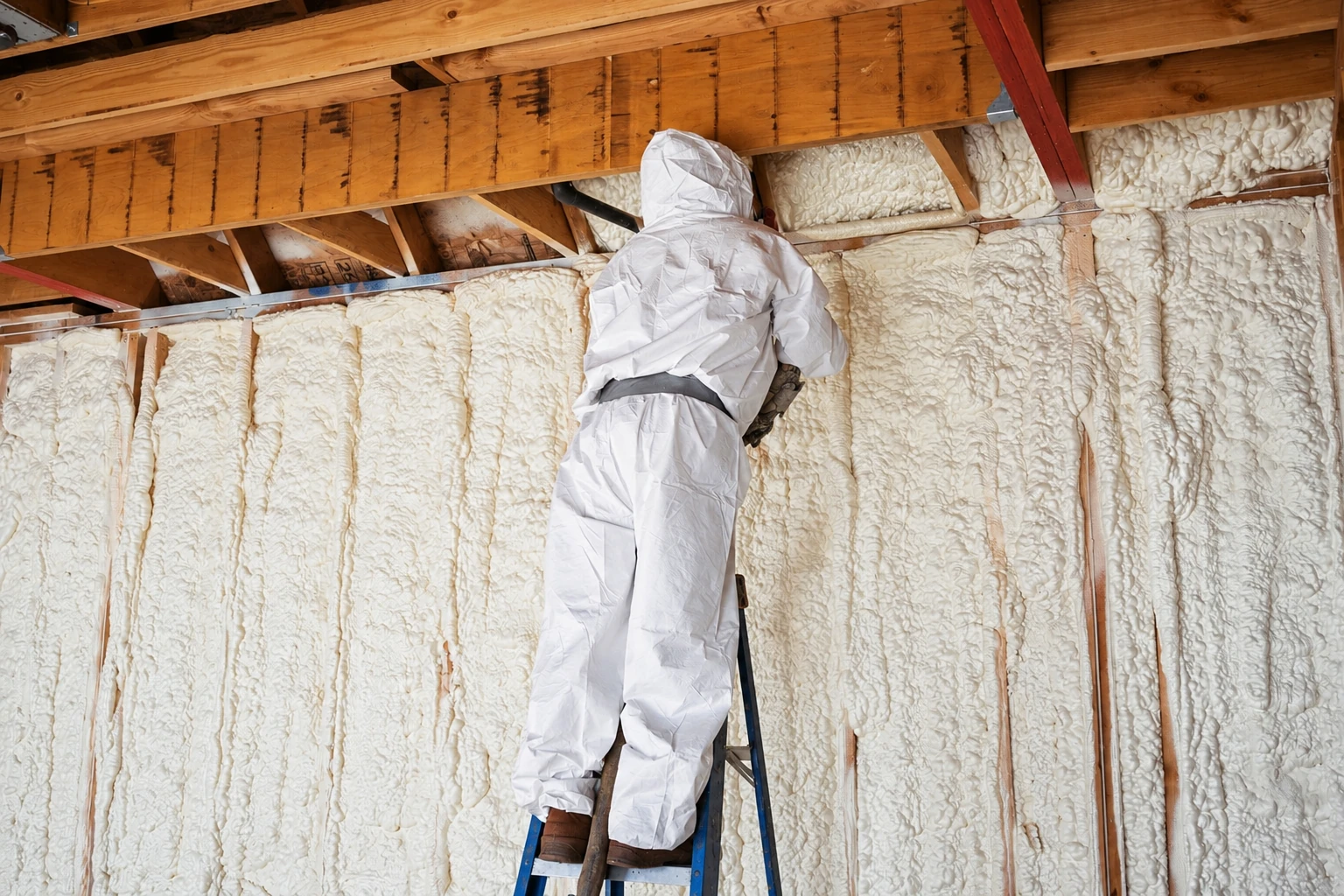
Spray foam seals air and insulates in one pass, which makes sense when your ductwork runs through the attic. It costs more than loose fill, so if sealing the gaps and topping up will do the job, I'll tell you.
R&S Hesperia Insulation Company insulates attics, walls, crawl spaces and shops in Piñon Hills, CA. We're based in Hesperia, and we seal the gaps and fix what's wrong up there before any new insulation goes in.
Summer days in Piñon Hills run past 90 degrees, and some winter months bring nights below 20, so the same attic has to keep heat out in July and hold it in through January. That's why most calls up here are about a hot upstairs, cold floors over the crawl space or a power bill that climbs in both seasons. On a windy day, dust and outside air come in through every gap around the hatch and the eaves, which is why we seal before we add anything.
Piñon Hills is unincorporated, so building permits come from San Bernardino County's Land Use Services office, not a city hall. We're based in Hesperia, and we do the same work next door in Phelan, up in Wrightwood and over in Lucerne Valley.
The price mostly turns on the size of the attic, how much old insulation has to come out first, how many gaps need sealing and whether you go with foam or loose fill. The schedule depends on removal, on a permit if your job needs one, and on how long foam needs before you can go back inside. I'll put your own figure on paper at the estimate.
If what's up there is soaked or full of droppings, we pull it out before adding more, because new insulation laid over a bad layer just keeps the problem in your house.
We close the gaps around can lights, pipes and the hatch first, so the new insulation isn't fighting a draft, and we keep the eave vents clear so the attic can still breathe.
Our own crew does the install, and I go up and check it before we leave, so the depth runs even out to the edges, where it usually ends up thin.
Spray foam seals air and insulates in one pass, which makes sense when your ductwork runs through the attic. It costs more than loose fill, so if sealing the gaps and topping up will do the job, I'll tell you.
Most hot-upstairs calls end in the attic. We measure the inches already up there, seal the gaps, keep the eave vents open and bring the edges up to the same depth as the middle.
Blown-in is loose fill we blow through a hose, so it settles around framing and wiring on its own. It's usually the right top-up for an older attic that's thin but still dry and clean.
When the whole house runs hot in summer and cold in winter, I walk the attic, walls and floors at the estimate and tell you which one to fix first and what can wait.
If the old insulation is soaked, flattened or full of droppings, we vacuum it out and clean up before anything new goes in, because covering it over keeps the smell and the problem.
Cold floors in winter usually trace back to the crawl space. We insulate under the floor and close the holes where pipes and wires come through, so cold air stops coming up into the rooms.
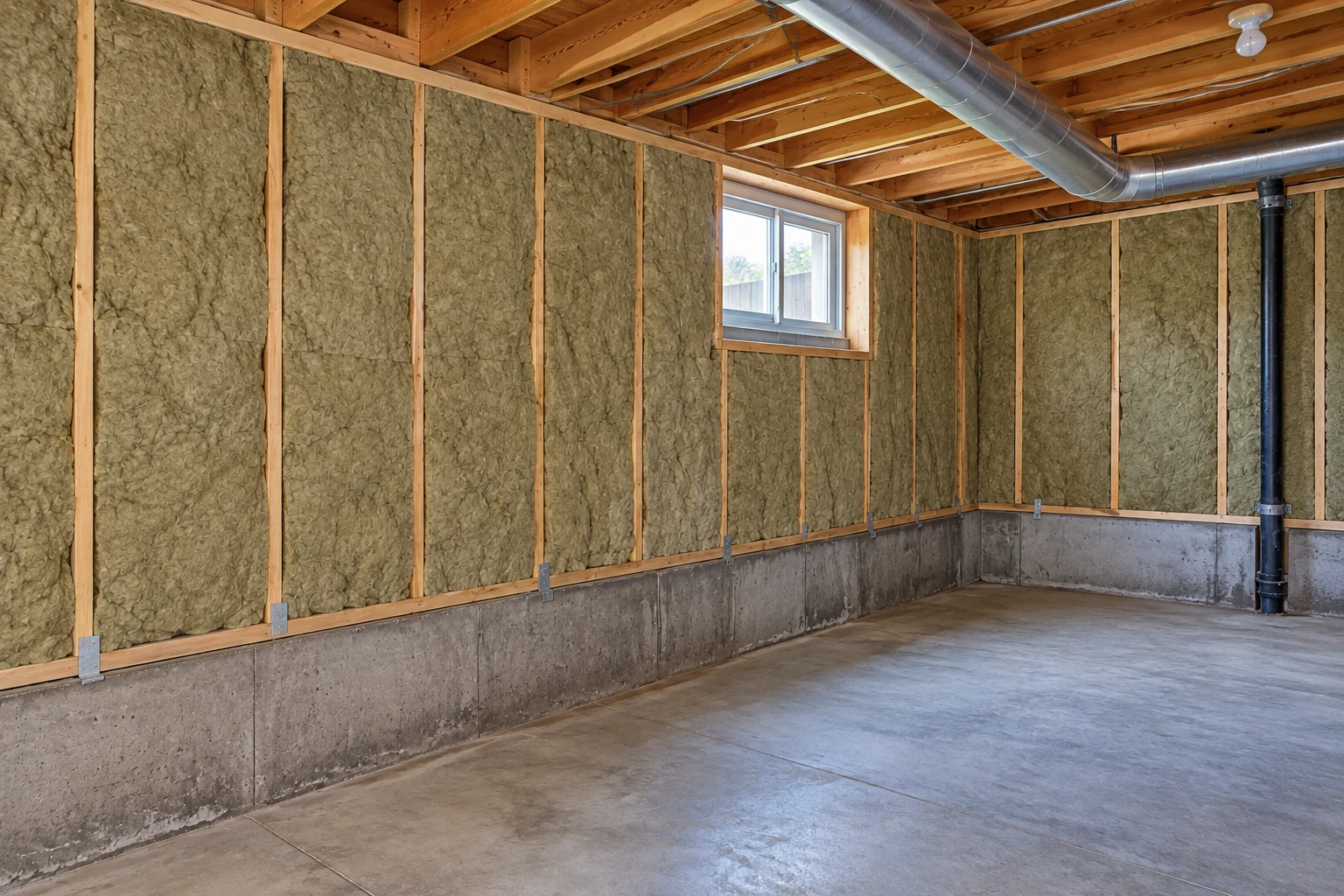
Walls with little or nothing inside leave a room drafty no matter what the attic has. We fill them through small holes, from outside or inside depending on your siding, then patch them.
Air sealing means closing gaps before we insulate. Across the house, we go after rim joists, plumbing and wiring holes, and the spots where wind and dust push in on a breezy afternoon.
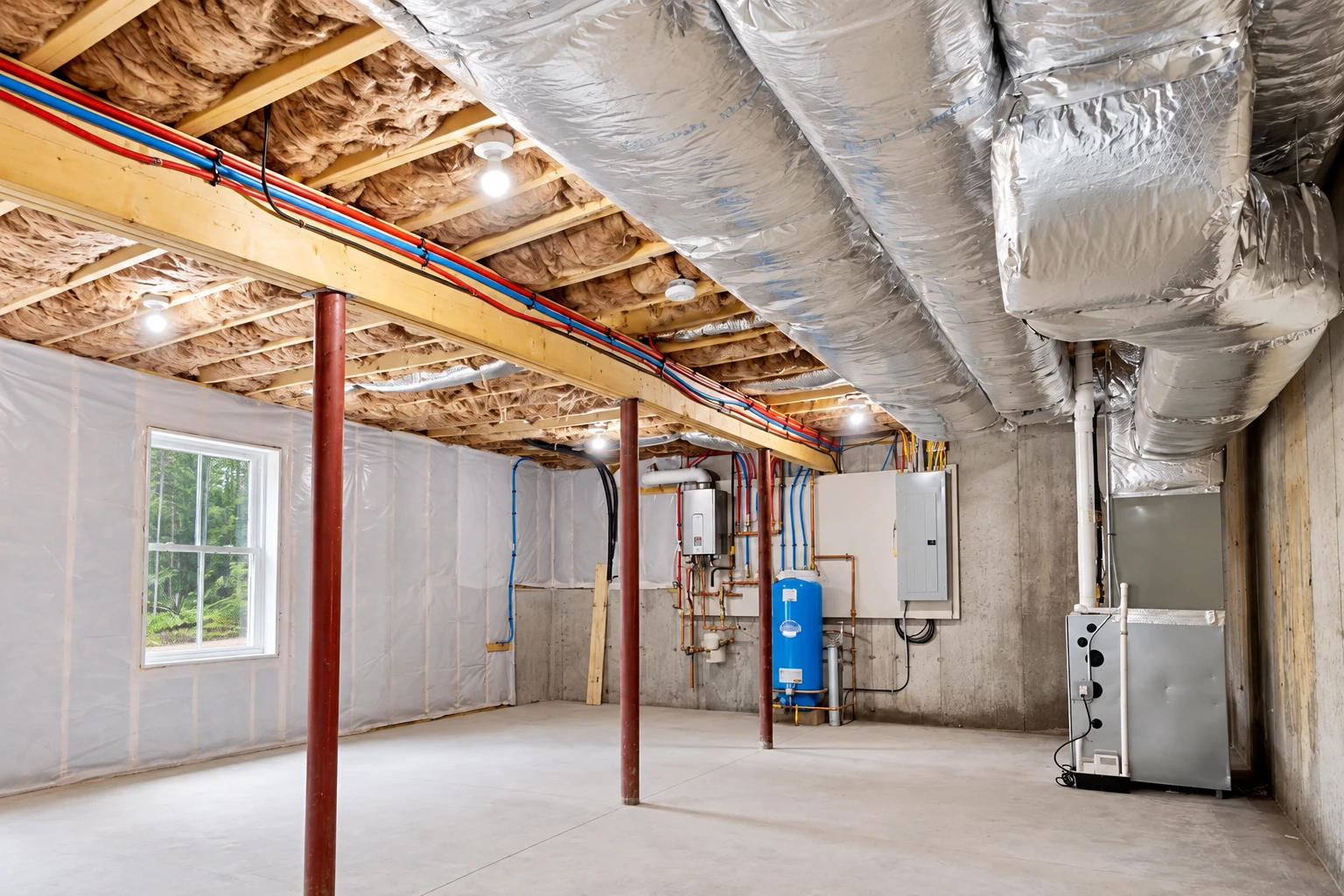
Few houses up here have basements, but where one does, we insulate the walls and the rim joist, the wood band on top of the foundation, so the space stops pulling heat from the rooms above.
Closed-cell foam is dense foam that also blocks moisture, so it suits rim joists, below-grade walls and metal buildings. It costs more than other options, and I'll show you where it pays and where it doesn't.
Open-cell foam is softer and fills odd rooflines and wall cavities completely, which helps a room over the garage that never cools down. It seals air but doesn't block moisture the way closed-cell does.
Shops, garages and small buildings sit through the same hot afternoons and cold nights as the houses here. We insulate them so the space holds its temperature and the heater or cooler isn't running all day.
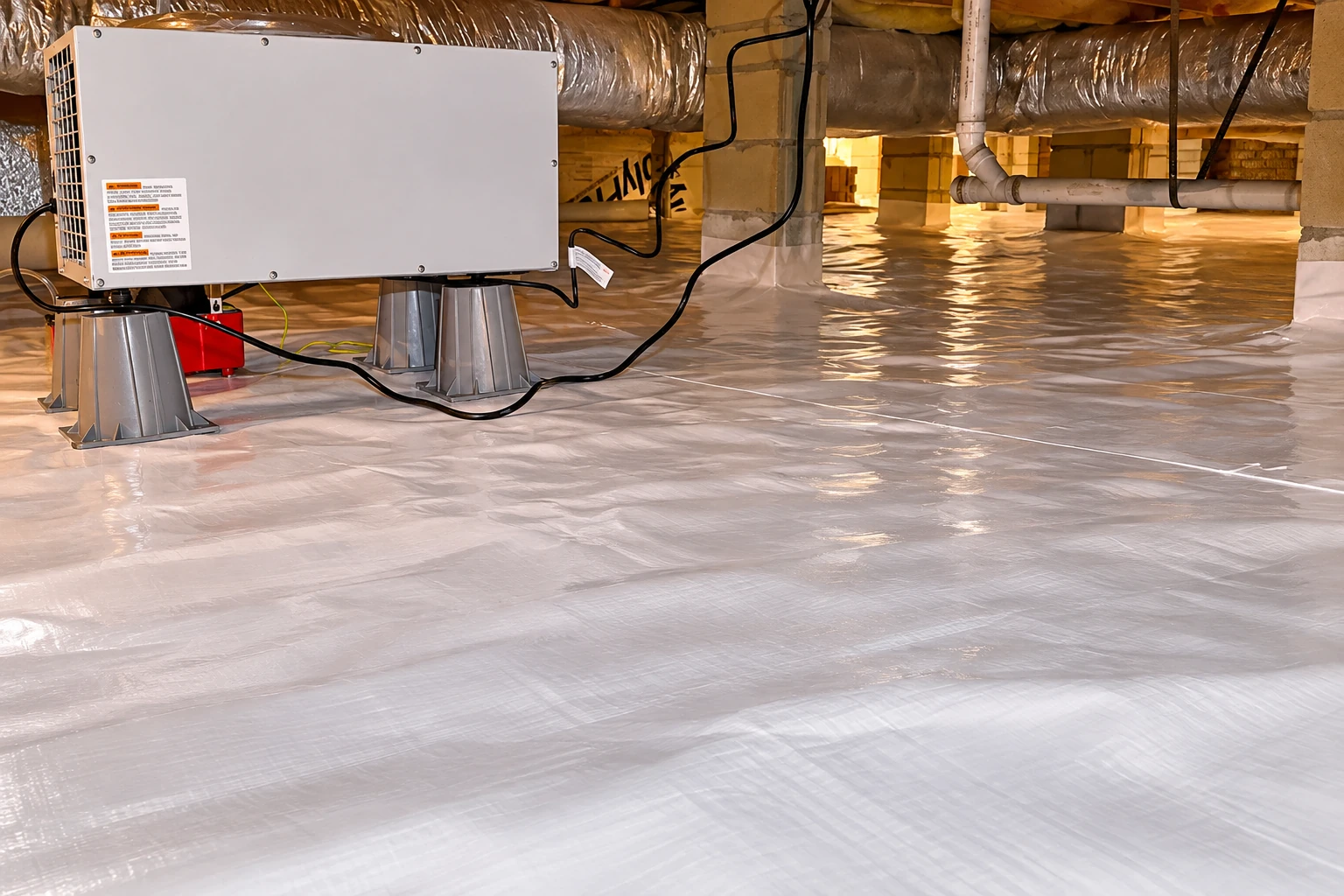
A crawl space vapor barrier is a heavy sheet laid over the dirt to keep ground moisture out of the floor framing. We seal the seams and edges, so it stays put when someone goes under there.
We put vapor barriers where moisture would otherwise work into insulation or framing, in walls, under floors or in a shop. I check which side it belongs on for your building before we start.
Before any insulation goes into the attic, we seal the top plates, the hatch and every hole a pipe or wire comes through. Skip this step and the new insulation fights a draft from day one.
Retrofit means adding insulation to a finished house without tearing it apart. We work through the attic, the crawl space or small holes in the walls, and we leave the rooms clean when we're done.
Send the form or call, and we'll reply within one business day to set a time. I come out, look at the space myself and write up a free estimate, with no obligation to go ahead.
I look at how many inches are already up there, whether the eave vents are clear and where air is getting in, because that decides what the job really is.
A hot upstairs, the room over the garage, cold floors or a high power bill each point to a different spot, so mention it and roughly how old the house is.
R&S Hesperia Insulation Company is licensed and fully insured, and our own crew does the install, not someone we hand it off to. Satisfaction guaranteed on every job.
Here's what Piñon Hills homeowners ask before we start, from County permits and state licensing to whether you need to leave home.
The County's permit list doesn't name insulation by itself, but it says work not on the list may still need a permit, so it's worth asking the County about your job. Additions, alterations and window or exterior door replacements are on the list. When your job calls for a permit, we handle the paperwork, or you can apply through EZ Online Permitting.
Usually, yes. The state licensing board requires a license when the job needs a building permit, uses any extra workers, or when labor and materials come to $1,000 or more, and a bigger job can't be split up to get under that. The County doesn't issue business licenses out here, so the state license is the one to look for.
Look up your address on the County's Parcel Map tool, which shows which agencies provide services to your property. The County calls knowing your property's jurisdiction an important first step for any project. It's quick to check before you call us, and it tells you up front which office you'd be dealing with.
Usually not for blown-in insulation or air sealing, since the work stays up in the attic and we cover the area under the hatch. Spray foam is different, and you, the kids and the pets stay out until the re-entry time the foam maker sets, which is when it's safe to come back inside. I'll tell you which one applies at the estimate.
These are the cities with their own page on our site, and we work in others around Hesperia too. If yours isn't listed, call or send the form and ask.
Call (760) 713-8598 or send the form, and if your attic's in decent shape, I'll tell you it can wait.