
Attics with only a few inches
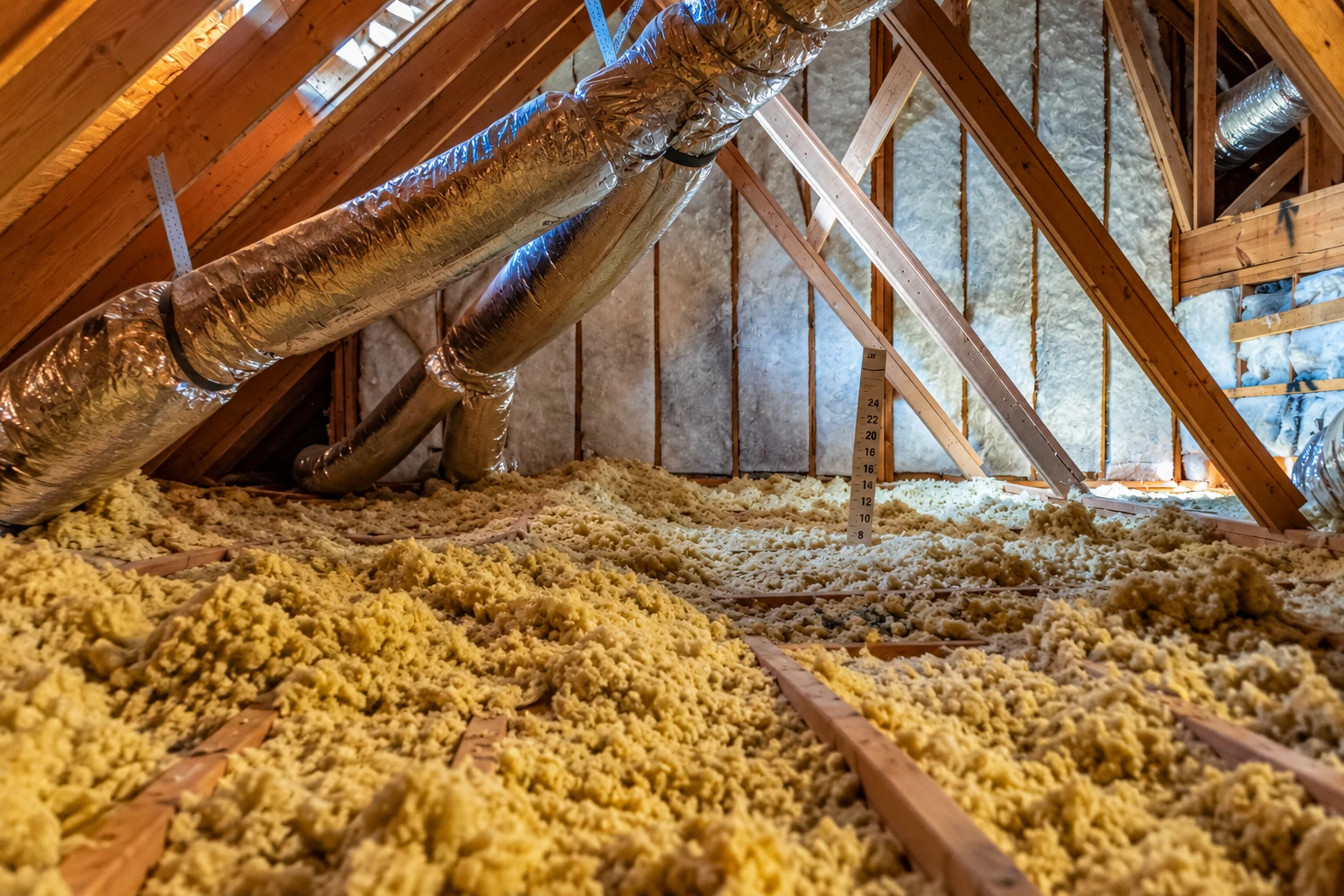
If you can see the tops of the ceiling joists, there isn't much up there. Those attics gain the most from a fresh layer, and the bedrooms under them feel it first.
Hot upstairs rooms and a power bill that climbs each summer usually trace back to a thin attic. We seal the gaps, then fill it evenly.
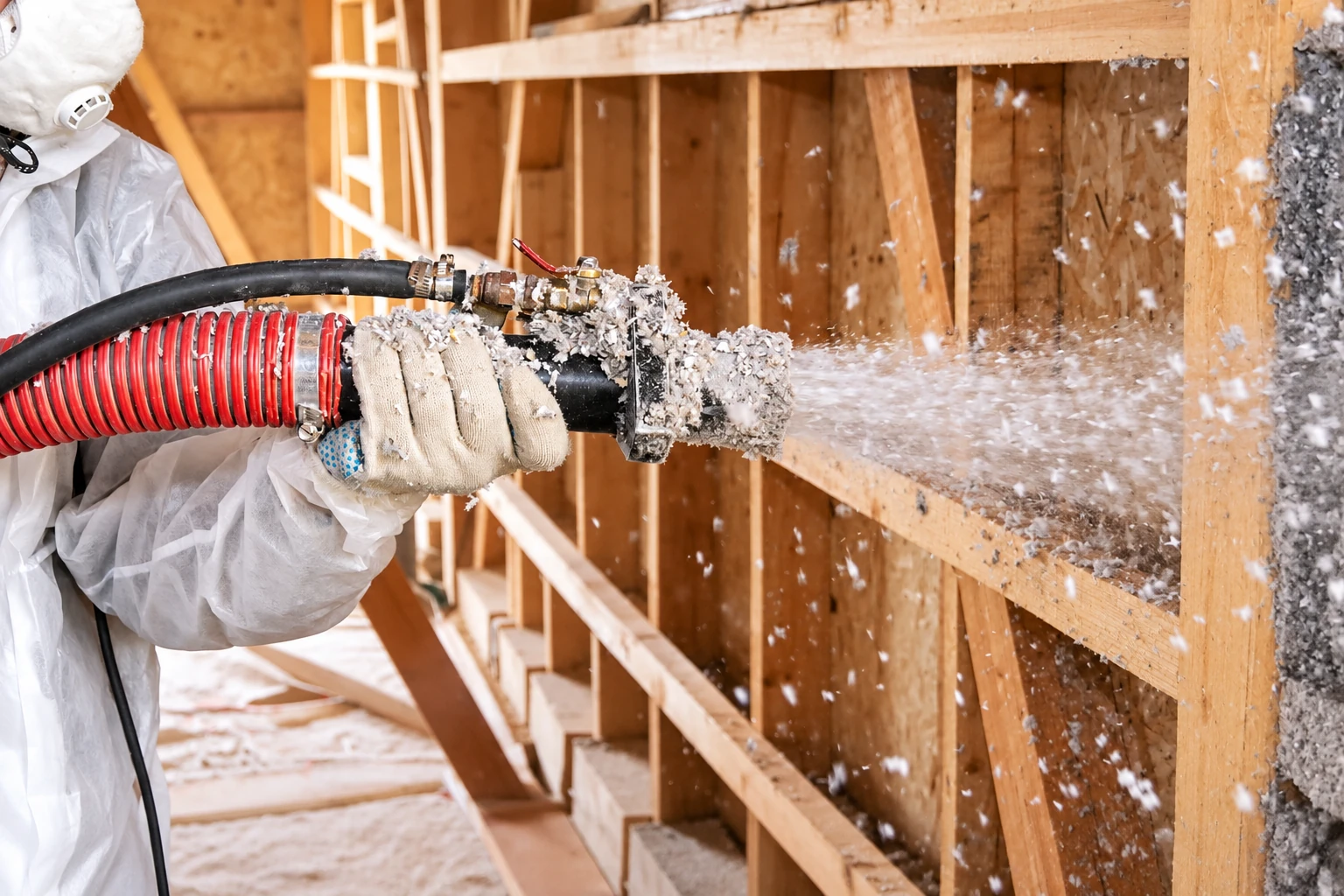
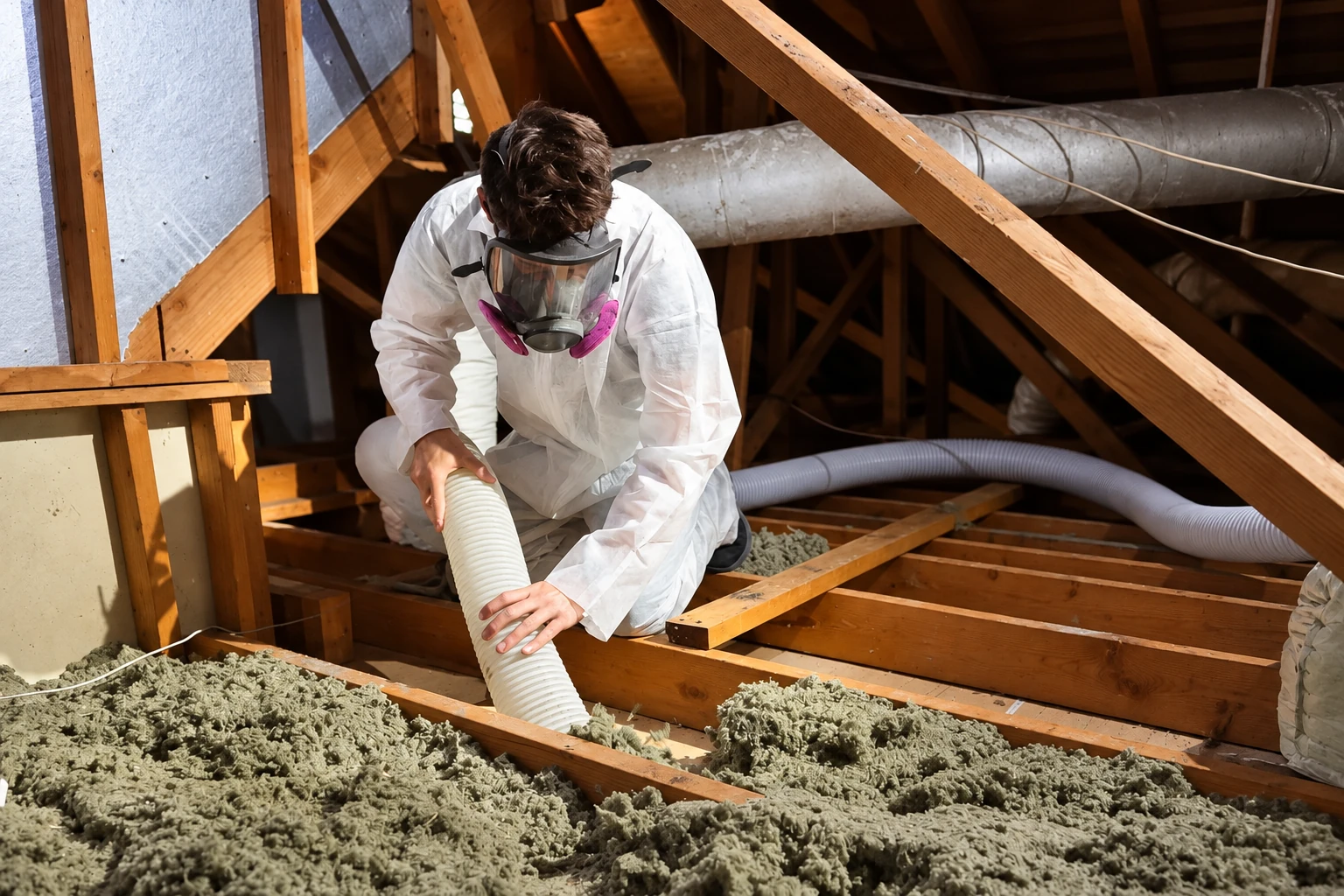
Blown-in insulation is loose fill we blow through a hose across your attic floor after sealing the gaps in the ceiling, and for most Hesperia homes it's a direct way to slow heat coming down in summer and going up in winter.
On a hot day a vented attic runs hotter than the air outside, so a ceiling with only a few inches up there, or nothing at all, lets that heat straight into the bedrooms. Those are the houses where adding more matters most, and around Hesperia we see plenty of them, mostly older homes where the original fill has settled thin and the room over the garage never cools off. We do the same work in Victorville, Apple Valley, Phelan and the other cities around Hesperia.
The price mostly comes down to how big the attic is, how much is already up there, how many gaps need sealing and whether anything has to come out or get fixed first. The schedule turns on that same prep, plus any testing or permit, and when a permit is needed we handle the paperwork with the city and set up the inspections. I come out, look in the attic myself and put it all in the estimate, so you see the work and the price before anything gets booked.
I've run this business in Hesperia since 2013, and I'm the one who climbs up, checks what's there and writes the estimate, so the price comes from someone who's seen your attic.
We're known for the prep. A leak, a bad wire or a blocked vent gets handled first, because loose fill blown over a problem just hides it until it costs you more.
Our own crew does the install, and I check the attic before we leave, so the depth is even and the vents are clear. Satisfaction guaranteed on every job.
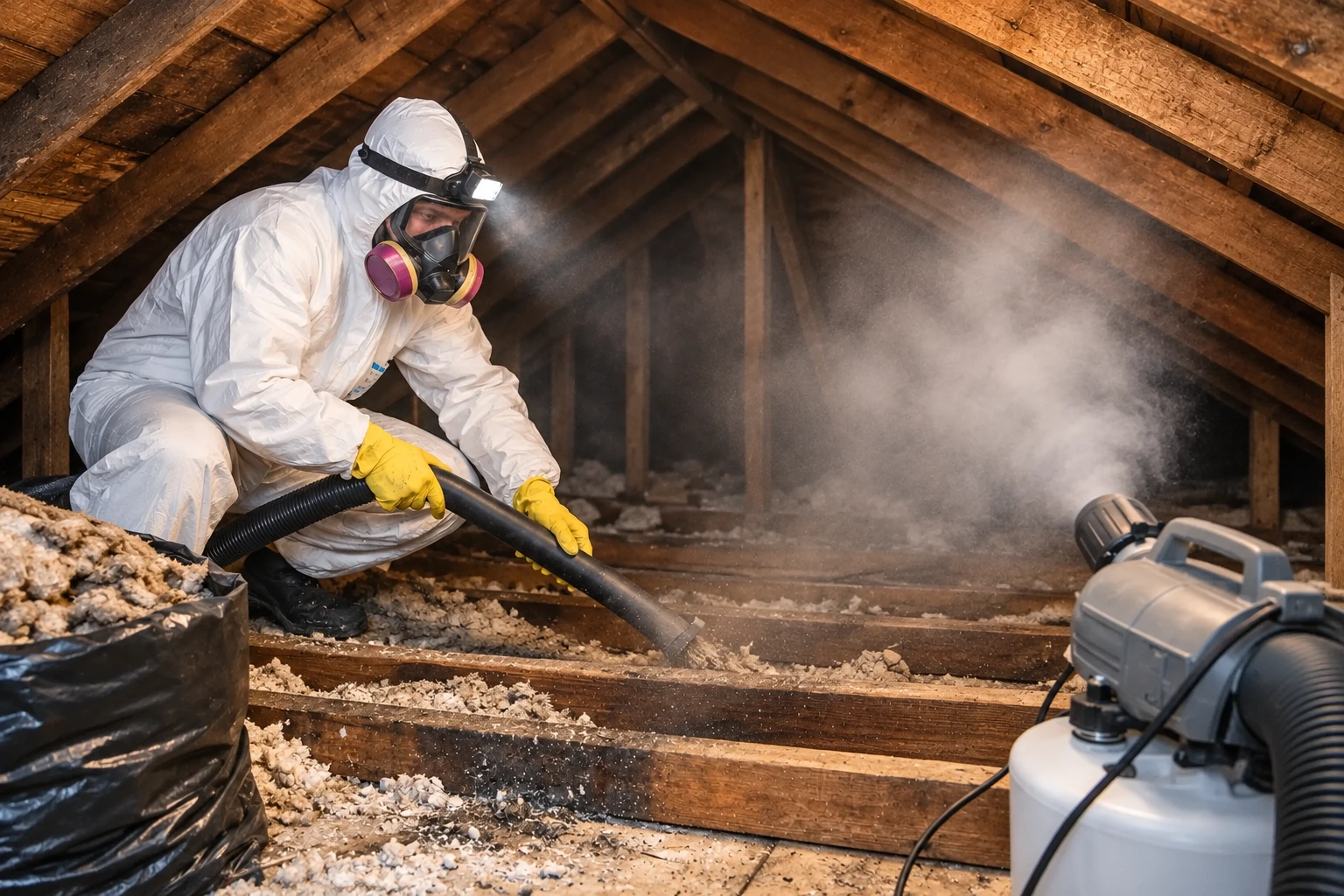
We start by looking at what's already up there, because new fill is only as good as what it sits on. If the old insulation is soaked, moldy or full of droppings, it comes out first through our insulation removal service, so you're not paying to bury the problem.
Next we seal the gaps around the hatch, pipes, wires and can lights, since air sealing, closing those openings before insulating, keeps the new layer from fighting a draft. Lights that aren't rated for contact with insulation get a sheet metal or wire mesh barrier so the fill stays clear of them. At the eaves we set baffles, simple guards that hold the vents open so the attic still breathes.
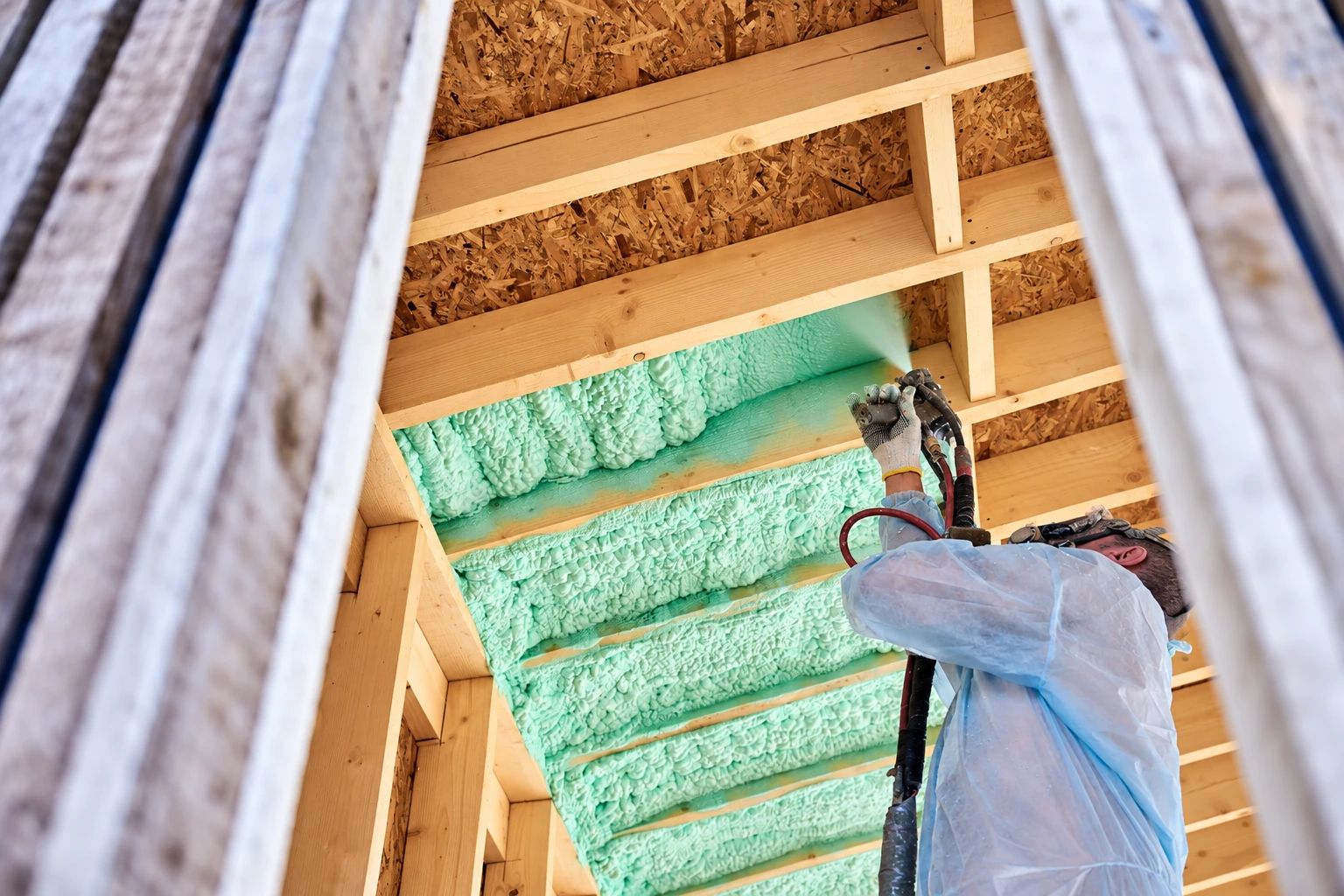
Then we blow the loose fill to an even depth across the whole ceiling, right out to the edges over the outside walls, which is where attics usually end up thin. Foam costs more and seals air while it insulates, but for most attics here, sealing the gaps and topping up with loose fill is the better buy unless your ductwork runs through the attic. If drafts are coming from walls or floors too, our home insulation work covers the rest of the house.
If you can see the tops of the ceiling joists, there isn't much up there. Those attics gain the most from a fresh layer, and the bedrooms under them feel it first.
That room usually has a thin, patchy ceiling with hot air on more than one side. Sealing and filling above it brings it closer to the rest of the house.
Once soaked or dirty insulation is cleared, the attic floor is bare. Blowing in a new layer covers it evenly and cleanly, all the way out to the eaves.
When you feel air moving around light fixtures or the hatch, the gaps are the real problem. We seal those first and then add fill, because insulation alone doesn't stop air from moving through a hole.
Send the form and we'll reply within one business day to set a time. I'll come look at your attic, then give you a written estimate, free and with no obligation.
Tell us if the hatch is in a closet, the garage or a hallway ceiling, so I bring the right ladder and know how we'll get the hose up there.
If you've peeked in, tell us roughly how many inches are up there and what kind. Batts, loose fill or gray pebbly material each change what I check first.
Let us know how many recessed lights are in the ceilings under the attic, since lights not rated for insulation need barriers and that changes the prep.
Examples of loose-fill depth, eave baffles and barriers around lights, to help you picture what we'd talk through in your attic.
Straight answers to what Hesperia homeowners ask most about getting an attic ready and getting blown-in insulation done right.
Yes, loose fill can go right on top of what's there, even when the old layer is fiberglass batts or blankets, since new insulation doesn't have to match the old type. The catch is that the old layer has to be dry and clean, so soaked or dirty material comes out first, as covered above.
Moldy or rotted framing, little or no ventilation and knob and tube wiring should be corrected before any insulation goes in, and knob and tube wiring can be a fire hazard when insulation touches it. Kitchen, bathroom and dryer vents that dump moist air into the attic are best rerouted outside first. That's why I check the attic before we book the job.
Leave it alone until an approved lab tests it for asbestos. Vermiculite is lightweight, flaky and gray, about the size of a pea, and your local health department can give you the name of an approved lab. We won't blow over it or move it until you have results.
Either can work, because some home improvement stores rent the blowing machine, but the machine is the easy part. The hard part is the prep: sealing gaps, guarding lights and eaves, and getting an even depth to the edges. If your attic is open, dry and simple, I'll tell you renting may be fine.
It may, because in a vented attic over heated or cooled rooms, adding or replacing insulation may count as altering the ceiling under the state energy code, and then set insulation and air sealing rules apply. The city's Building & Safety Division issues permits before work starts, so ask its permit center about your job. When one's needed, we handle it.
The state's C-2 Insulation and Acoustical Contractor class covers contractors who install any insulating material for temperature or sound control, which includes blowing loose fill into an attic. We're licensed and fully insured, and our own crew does the install, so the people in your attic work for us.
Call (760) 713-8598 any day from 7 AM to 11 PM, or send the form, and you'll know what's up there before you spend anything.