
Attics, even the shallow ones
The attic is usually what's behind a hot upstairs. If yours is too shallow for the full amount, California's energy code has the whole reachable space filled, where other code sections allow it.
Hot upstairs rooms, cold floors or a power bill that keeps climbing? We seal the gaps first, then insulate where it pays off.
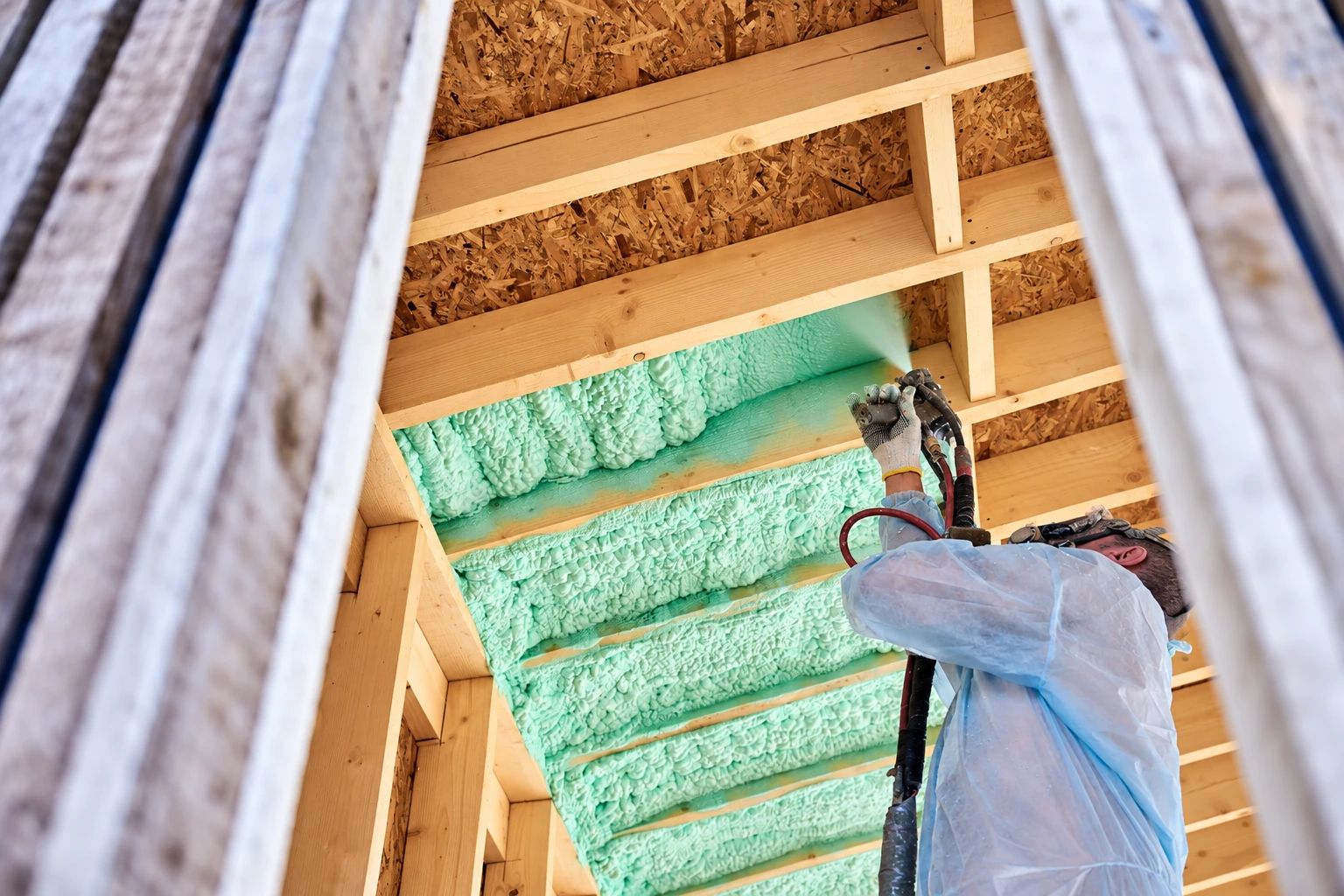
Home insulation in Hesperia means adding insulation where your house loses heat and lets it in, mainly the attic, the floors over a crawl space and the rim joists along the top of the foundation, so your rooms hold the temperature you set.
Most people call us about a hot room upstairs, a drafty floor, the room over the garage or a power bill that won't come down. The price turns on how big the house is, which areas need work, how much sealing has to happen first and which material makes sense. The schedule turns on how easy the attic and crawl space are to get into and whether a permit and inspection are part of the job. I come out, look at it and put your number on paper.
I'm the one who comes out, climbs into the attic and writes the estimate, so the person pricing your job has actually seen the space and what's already up there.
Since 2013 we've been known for the prep. Gaps get sealed and problems get fixed first, because insulation laid over a leak or a bad wire only hides it.
If your attic is already in decent shape or another fix should come first, I'll tell you. Sometimes the honest answer is that you don't need us yet.
I start by walking the whole house with you, from the attic down to the floors and the crawl space, because a hot bedroom upstairs and a cold kitchen floor usually have different causes. I check how many inches are already up there and look for wet or dirty spots, then tell you where your money does the most good and what can wait.
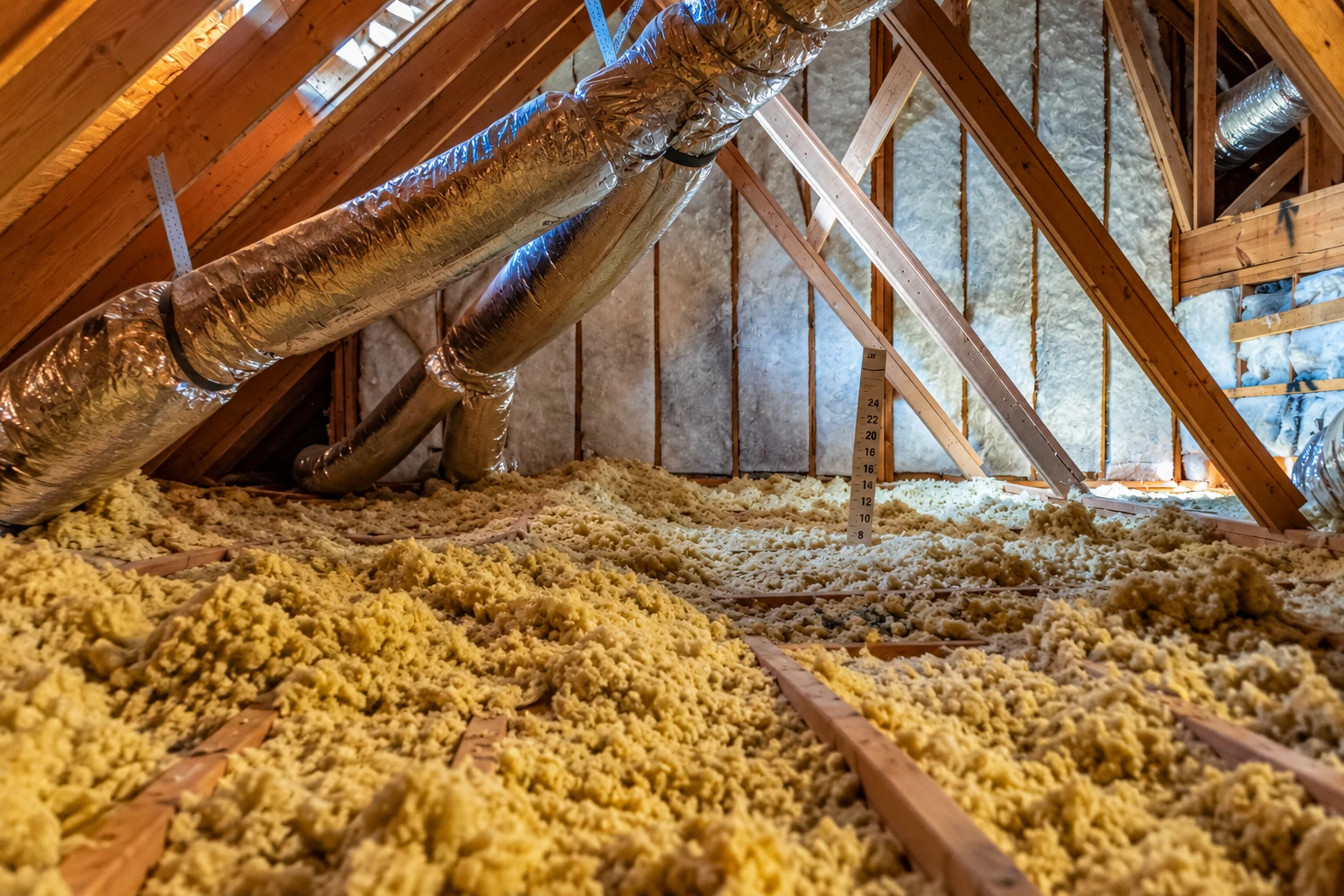
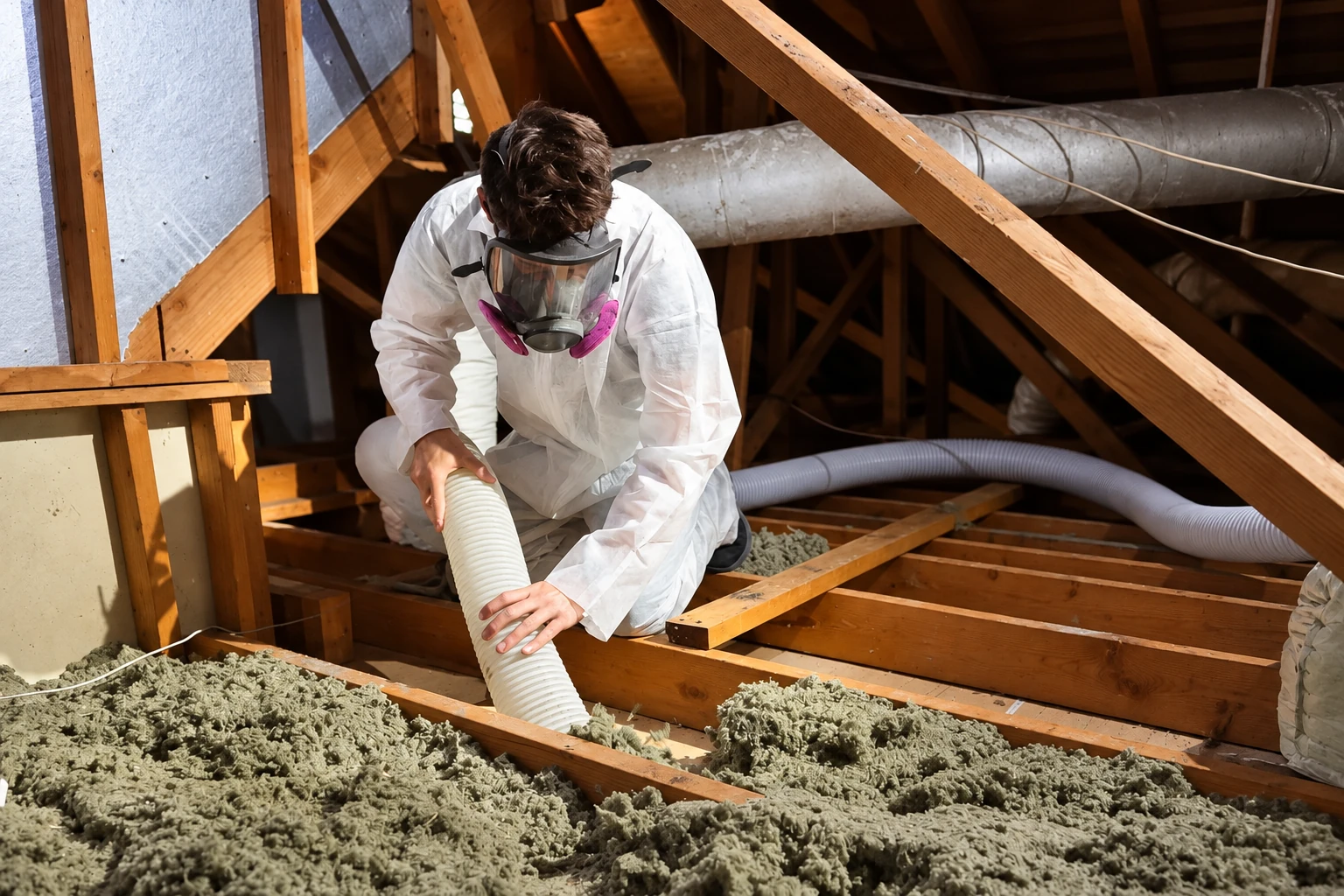
If there's a roof leak or a bad wire, it gets fixed before anything covers it. Our crew then seals the gaps around pipes, wires and the attic hatch so the new insulation isn't fighting a draft. In most attics we use blown-in insulation, loose fill we blow through a hose. We keep it off the eave vents so the attic can still breathe, and we carry it full depth out to the edges, where it usually ends up thinnest. Foam costs more and seals air while it insulates. In most houses I'd put the money into sealing and loose fill, and I'd go with foam when your ductwork runs through the attic. With loose fill you can usually stay home while we work. With foam you'd be out of the house until the foam maker's re-entry time, the point when it's safe to come back in.
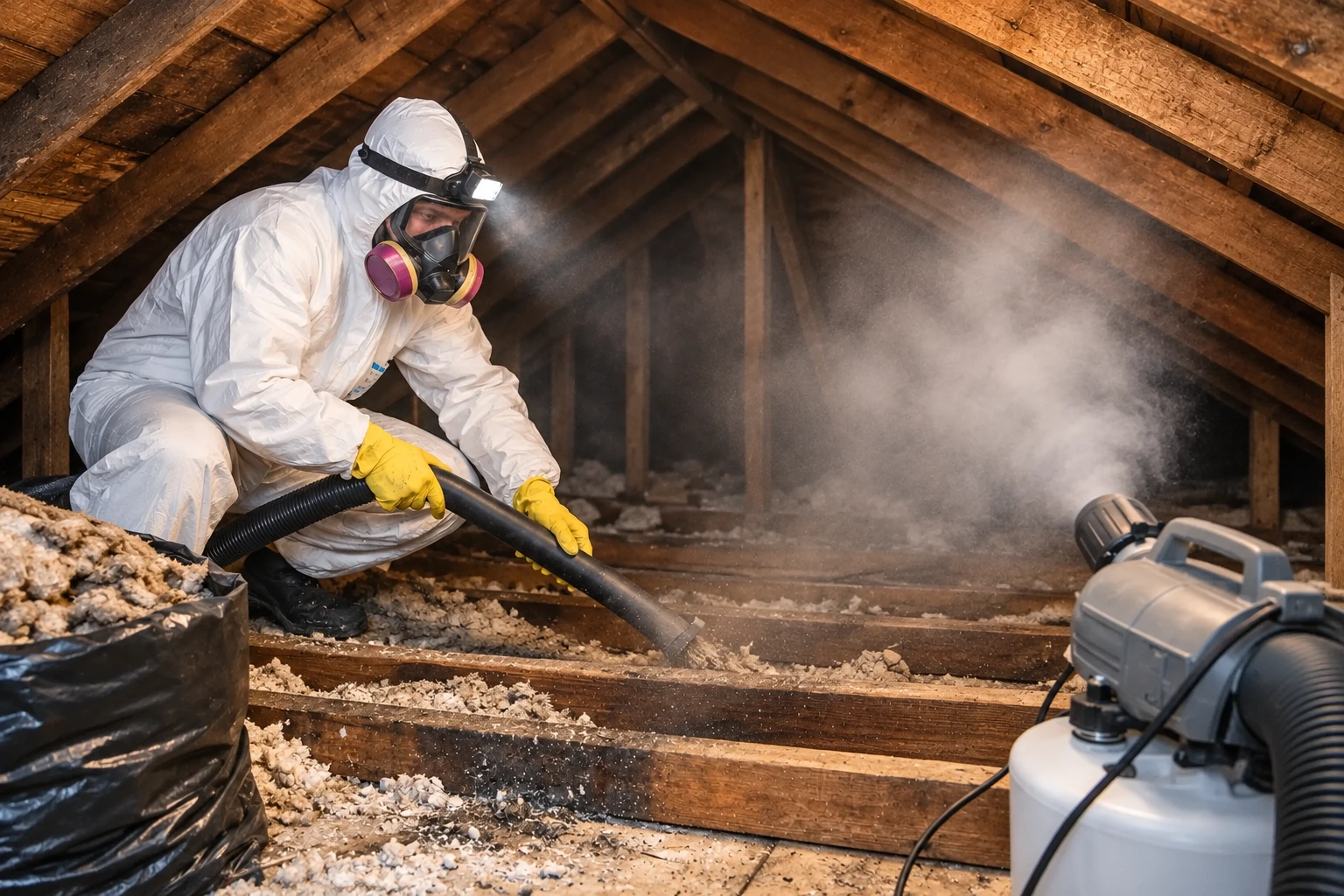
Cold floors usually point to the crawl space, which we cover on our crawl space insulation page. If what's in your attic now can't stay, that's a separate job, insulation removal, and I'll tell you at the estimate whether you need it. Our own crew does the install, I check the work before we leave, and you get in writing what we put in and where.
The attic is usually what's behind a hot upstairs. If yours is too shallow for the full amount, California's energy code has the whole reachable space filled, where other code sections allow it.
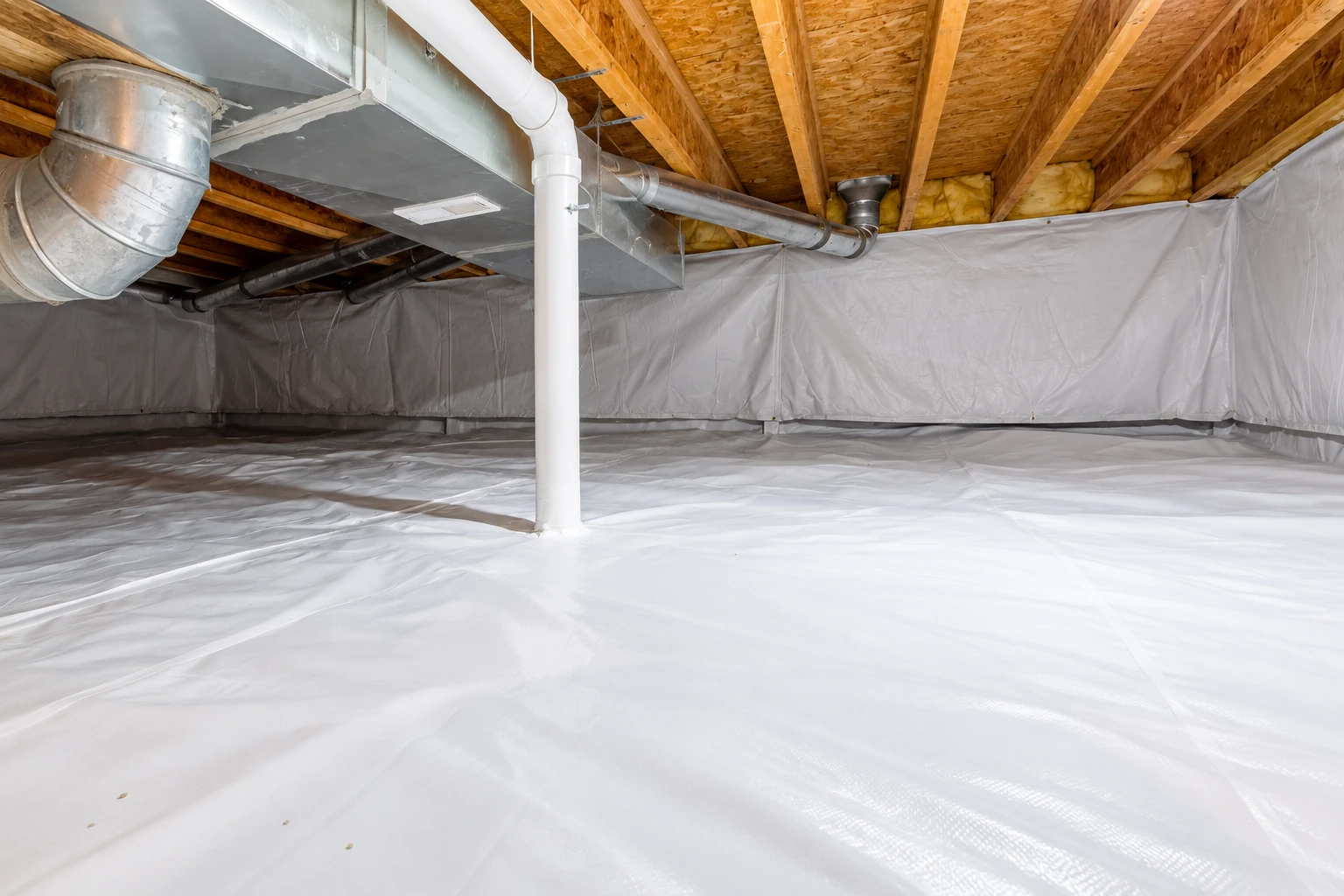
Cold floors in the morning usually mean the crawl space underneath is open to outside air with little or nothing under the subfloor. Insulating under the floor makes those rooms easier to keep warm.
The rim joist is the board running around the top of the foundation where the floor framing sits. It's easy to miss, and gaps there let outside air straight into the floor.
That room is usually hot in summer and cold in winter because it has open air below it as well as the roof above. We check the floor and walls there, not just the attic.
Send the form and we'll reply within one business day to set a time. I'll come out, look at the house myself and write up a free estimate, with no obligation to go ahead.
A hot bedroom, a cold floor or the room over the garage tells me where to look first, so the visit goes straight to the part of the house that's costing you.
If you have recessed can lights in the ceiling, tell us roughly how many and in which rooms. They change how we seal the attic, so I want to plan for them.
The year the house was built tells me what's likely up there now. If you've been in the attic, a guess at how many inches are already there helps too.
These photos show blown-in attic floors, batts under floors and sealed rim joists, examples we can talk through when I'm at your house.
These are the questions people ask me most about insulating a house here, from cost and sealing to permits and paperwork.
Insulation in the San Bernardino area usually costs about $1 to $5 per square foot. Where your house falls in that range depends on the material, how much sealing comes first, how deep we go and how hard the attic or crawl space is to reach. I'll give you a figure for your own house once I've looked at it.
Yes. In an existing attic with vents to the outside, the openings in the attic floor should be sealed first with sealant, one-part spray foam or rigid blocking, so a quote should show sealing ahead of the new insulation. Hot flues get metal blocking and collars, and can lights not rated to touch insulation get covers, so ask how yours will be handled.
On average, adding insulation and sealing air leaks can save up to 15% on heating and cooling costs, or up to 11% on total energy costs, according to a national energy guide. Those averages count the two jobs together, so plan the sealing and the insulation as one job. What your house saves depends on where it's losing heat now.
Only the property owner or the owner's licensed contractor or authorized agent can get a building permit in Hesperia, and it has to be issued before construction or remodeling starts. The city's Building & Safety Division issues permits and does the field inspections, so ask them whether your job needs one. When it does, we handle the paperwork and set up the inspections.
California's Contractors State License Board lists a C-2 Insulation and Acoustical Contractor class for contractors who install insulation for temperature or sound control. We're licensed and fully insured, and I'm glad to go over that with you when I come out to look at the house.
Under California's energy code, the contractor who installs insulation has to certify to you in writing that it meets the code, so ask for that statement. With loose fill in the attic, a contractor's guide suggests stapling rulers in several spots to show depth and even coverage, and you can check settling against them later. Satisfaction guaranteed on every job.
We pick up from 7 AM to 11 PM, Monday through Sunday, so call (760) 713-8598 or send the form whenever that hot room gets to you.