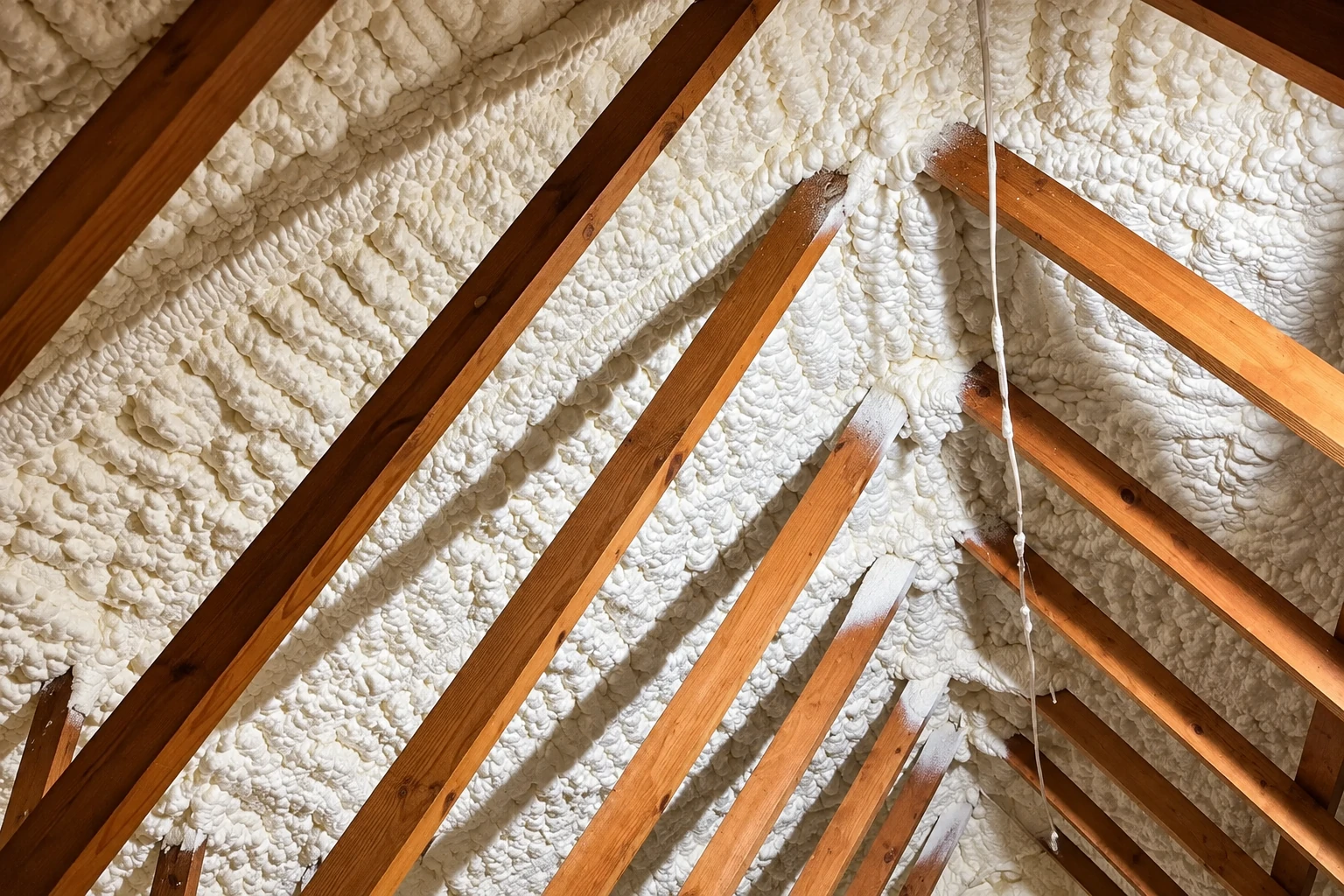
Upstairs rooms that run hot
When the upstairs runs hotter than the rest of the house, attic air is usually trading places with house air through gaps in the ceiling, and sealing those gaps is where I'd start.
Hot upstairs rooms, drafts and a high power bill often start with gaps in the ceiling. We seal them before any insulation goes in.
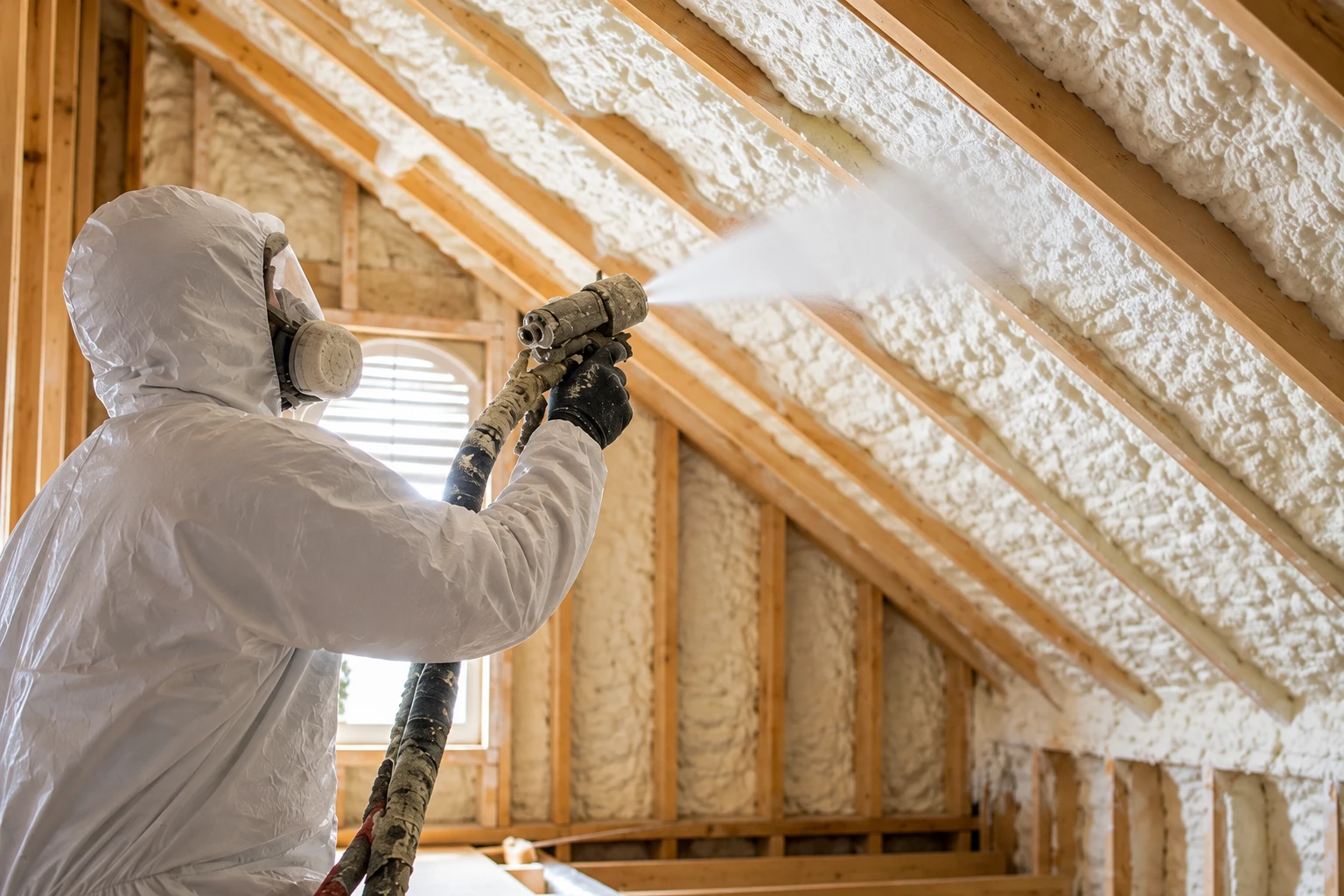
Attic air sealing in Hesperia closes the gaps and holes in your ceiling where house air leaks into the attic, around pipes, wires, lights and flues and along the tops of the walls, and it's the first step before any new insulation goes in.
Most calls start with a hot room upstairs, a draft near a ceiling light or a power bill that keeps climbing. Air moves through every gap in the ceiling, so insulation piled over those gaps can't do its job until they're closed. We're based in Hesperia and work in Victorville, Apple Valley, Phelan and the other cities around it.
The price turns on how many gaps there are and how hard they are to reach, how much flooring and stored stuff has to move, and whether a repair has to happen first. Those same things set the schedule, since a repair or an appliance swap comes before we seal. I look at the attic myself before I put a price on paper, and if your attic doesn't need us yet, I'll tell you that. The state licensing board has a license class for contractors who install insulation for heat or sound control, and we're licensed and fully insured.
I learned insulation working my dad's jobs as a kid, and we've been in business since 2013, so the order of the work is something I don't have to guess at.
I'm the one who climbs into your attic and writes the estimate, so the person pricing the job is the one who saw the gaps and knows what has to come first.
Our own crew does the sealing, and I check the work before we leave, because a missed gap around a flue or the hatch is hard to find once insulation covers it.
First we clear a path, moving stored boxes where we need to and lifting any attic flooring that's in the way, because you can't seal what you can't reach. If that flooring is also holding the roof framing together, its job gets handed off first, for example to collar ties, the boards that tie the rafters together, before a board comes up.
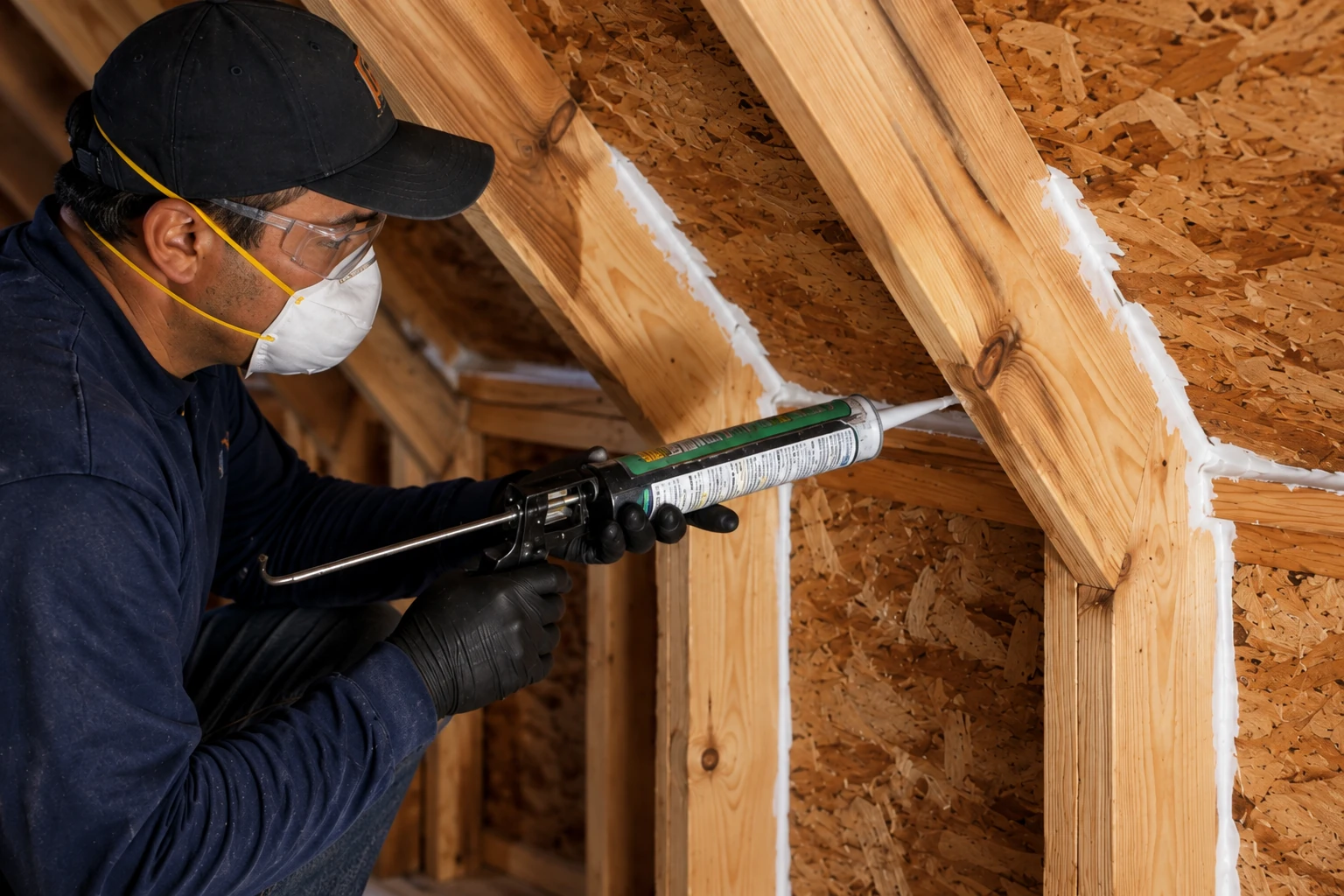
Then we seal around flues, can lights, pipes, wires and the tops of the walls, where most of the air gets through. Small gaps usually get caulk and bigger ones get foam, and around hot flues the federal guidance calls for high-temperature caulk with metal collars and blocking, since foam doesn't belong against hot metal. Big holes and open soffits, the boxed-in spaces over cabinets, get solid blocking first. If your can lights aren't rated to touch insulation and seal air, ask us about covers over them. The hatch or pull-down stairs get attention too, since a loose one leaks like an open window, so we weatherstrip it and look at a latch that pulls it tight.
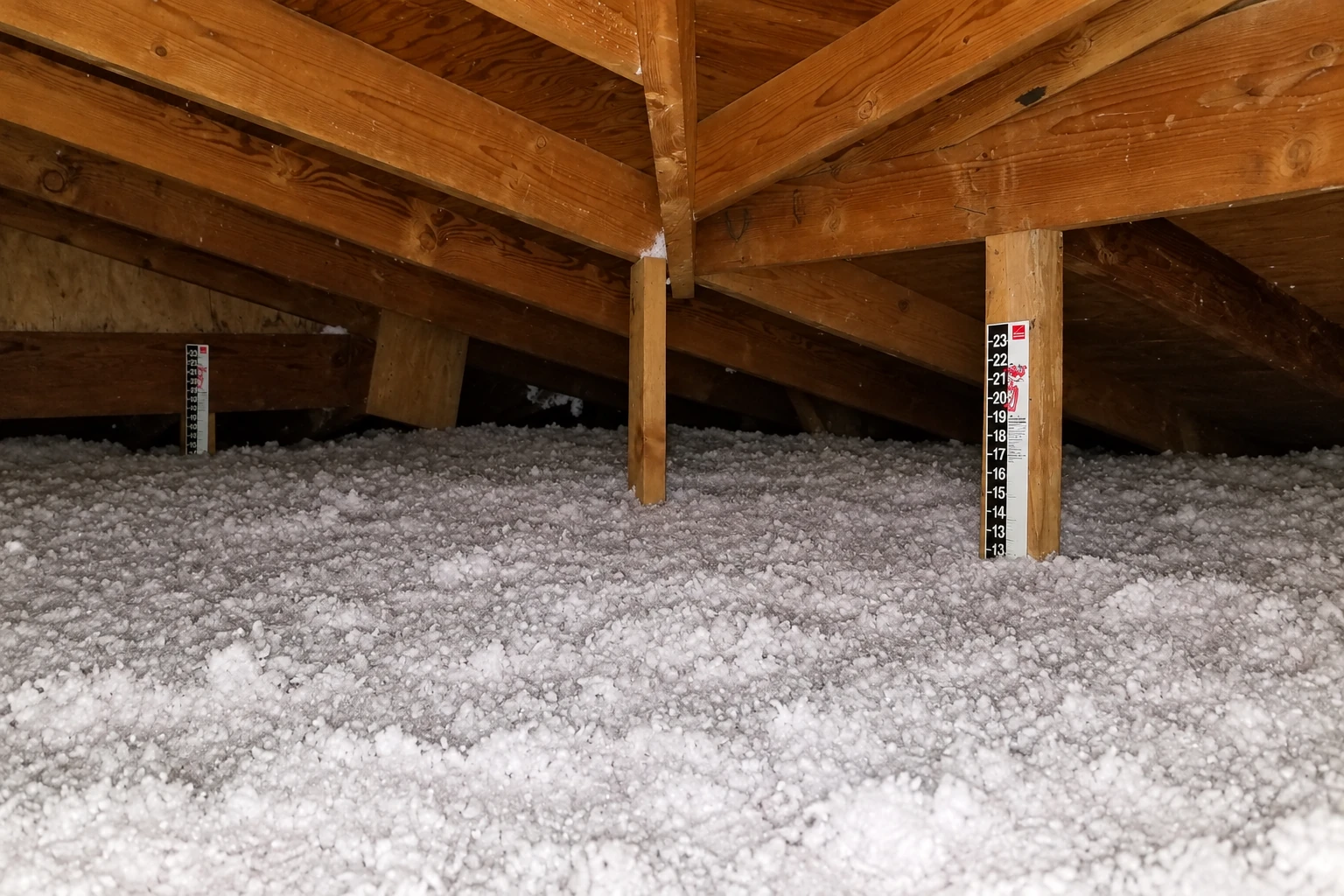
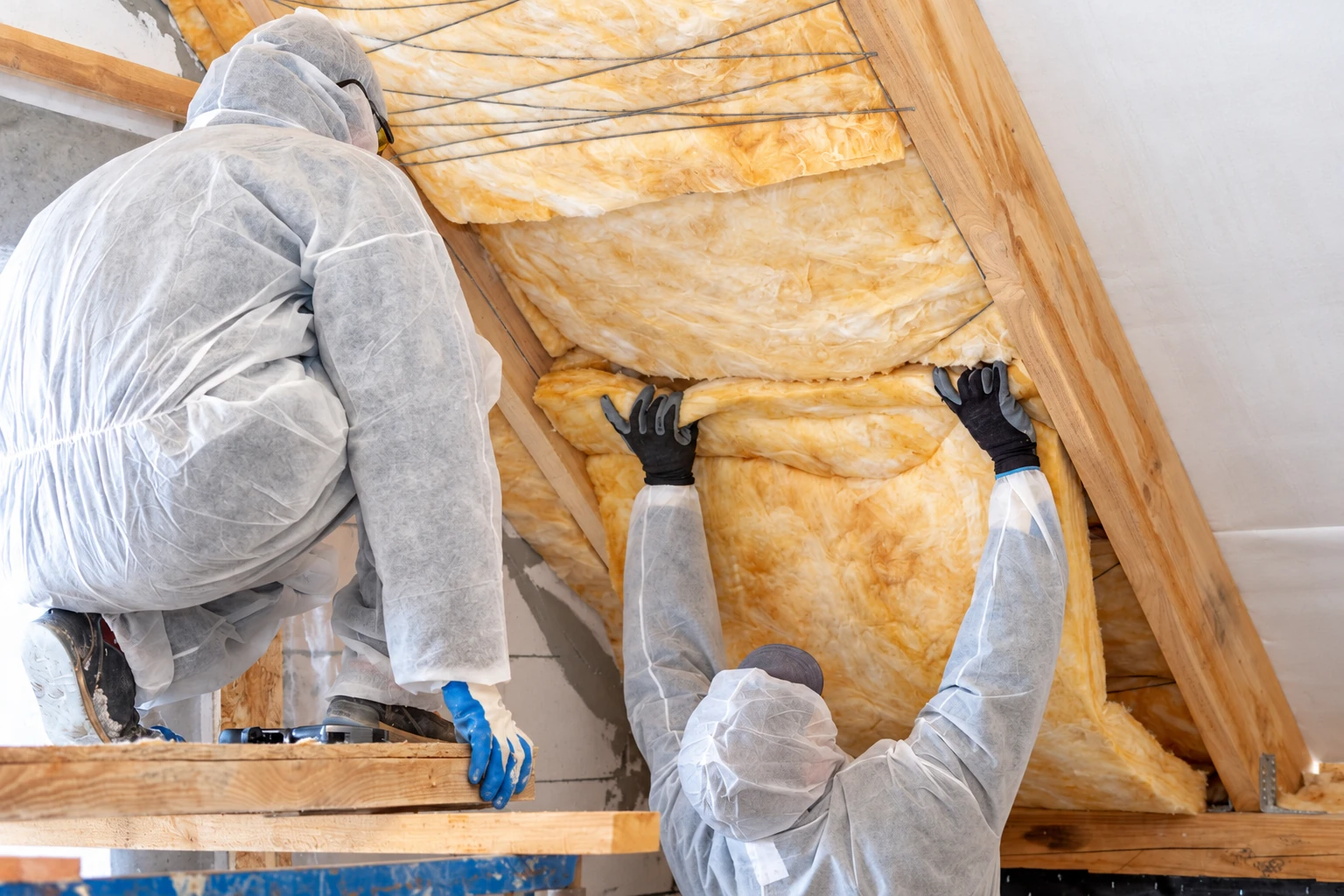
Once the gaps are closed, insulation can go on top. For most attics that means retrofit insulation added over what's already there, and that usually wins on cost. Spray foam insulation costs more but seals while it insulates, so it's the one I'd point you to if your ductwork runs through the attic.
When the upstairs runs hotter than the rest of the house, attic air is usually trading places with house air through gaps in the ceiling, and sealing those gaps is where I'd start.
Rooms over a garage often have open gaps where the walls meet the floor framing, so they run hot in summer and cold in winter no matter what the thermostat says.
If you feel air or see dust streaks around can lights, ceiling fixtures or the attic hatch, those are leaks into the attic, and they're the spots we go after first.
When old, dirty insulation gets pulled out, the attic floor is bare and every gap is easy to reach, which makes it the best time to seal before new insulation goes down.
Send the form and we'll reply within one business day to set a time. I'll come out, look at your attic myself and give you a written estimate, free and with no obligation.
Tell us whether they run on gas and where they sit, because gas units that vent up a chimney change the safety checks we plan before any sealing starts.
Let us know about boxes or flooring up there, since anything in the way has to move before we can reach the gaps, and that changes how we plan the job.
Mention a roof leak, old wiring or a bath fan blowing into the attic, so I can look for it at the estimate and tell you plainly what needs to come first.
These photos show sealed wall tops, blocked openings, hatch weatherstripping and flue collars, the kinds of details we can talk through at your estimate.
Straight answers on permits, repairs, gas appliances and vents, the things worth sorting out before we seal your attic.
The city's permit list doesn't settle it, because it names mechanical, plumbing and electrical work and not air sealing, so check with the Hesperia Permit Center before work starts. Any permit has to be issued before work begins, and only you, your licensed contractor or an authorized agent can pull one. When a job calls for a permit, we handle the paperwork and set up the inspections.
Yes, the sealing comes first and the insulation goes in after it. Insulation slows heat, but air moves right through it, so laying it over open gaps leaves it fighting a draft and buries the leaks where nobody can find them. If you're planning new attic insulation, book the sealing as the first step of the same project.
A federal guide lists a leaking roof, active knob and tube wiring, vermiculite insulation and bathroom fans that blow into the attic as things to fix first. Most attics have none of these, but if one turns up, the repair comes before we seal, which adds a step to the plan. Old insulation that's soaked or full of droppings comes out too.
Yes, with the right checks. A federal guide says gas furnaces and water heaters on a natural draft chimney need combustion air straight from outside, so plan on a backdraft test, a check that exhaust goes up the chimney, and carbon monoxide detectors. The guide's best fix is a sealed-combustion or power-vented unit, and a new furnace counts as mechanical work on the city's permit list.
Soffit vents under the eaves, ridge and gable vents, and any combustion air ducts all stay open, because they're openings built in on purpose and only work with air moving through them. Air sealing closes the leaks from your rooms into the attic, not the attic's own vents. We keep insulation off the eave vents too, since a buried vent can leave moisture in the framing.
Call (760) 713-8598 any day from 7 AM to 11 PM, or send the form, and we'll set a time to look at your attic.