
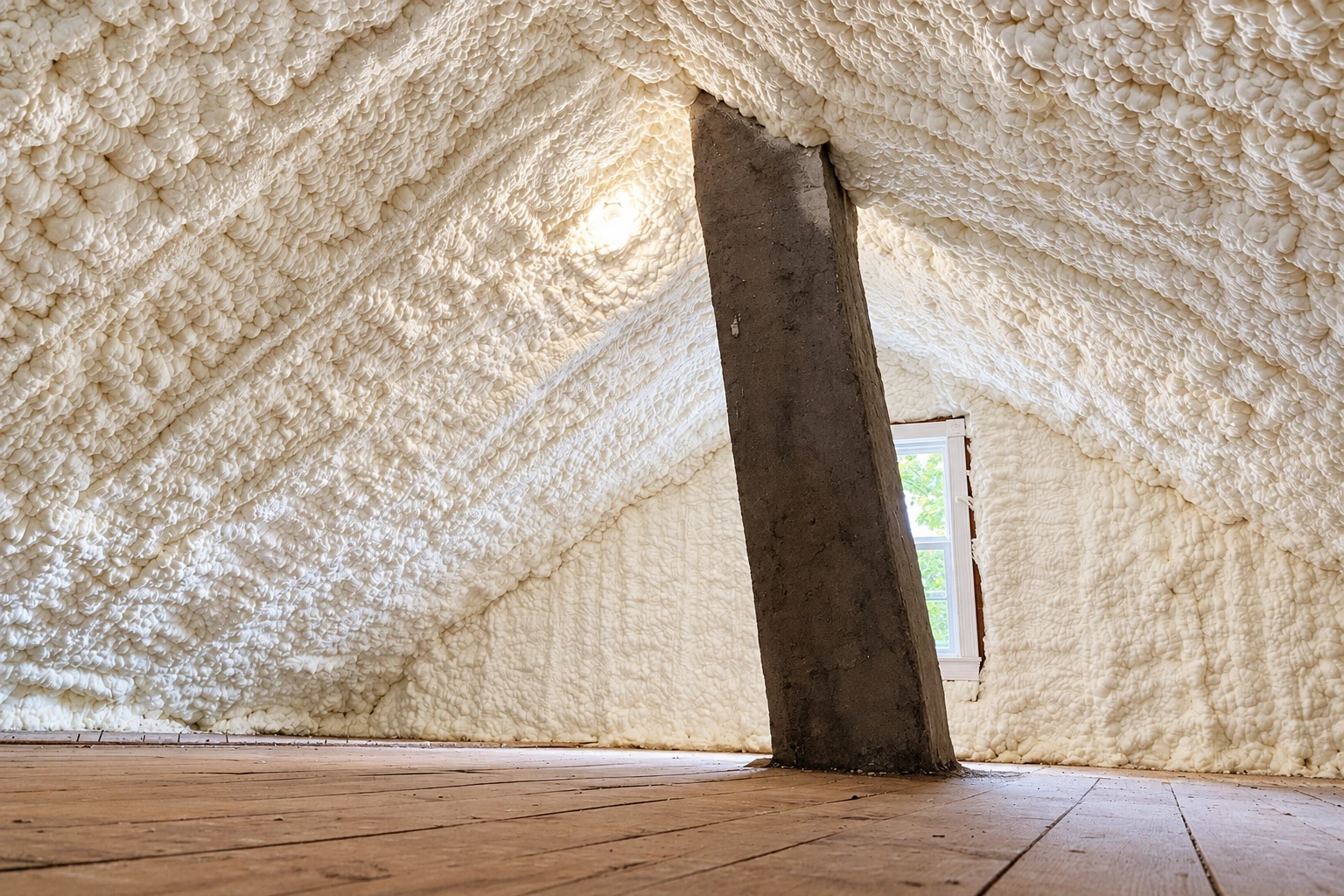
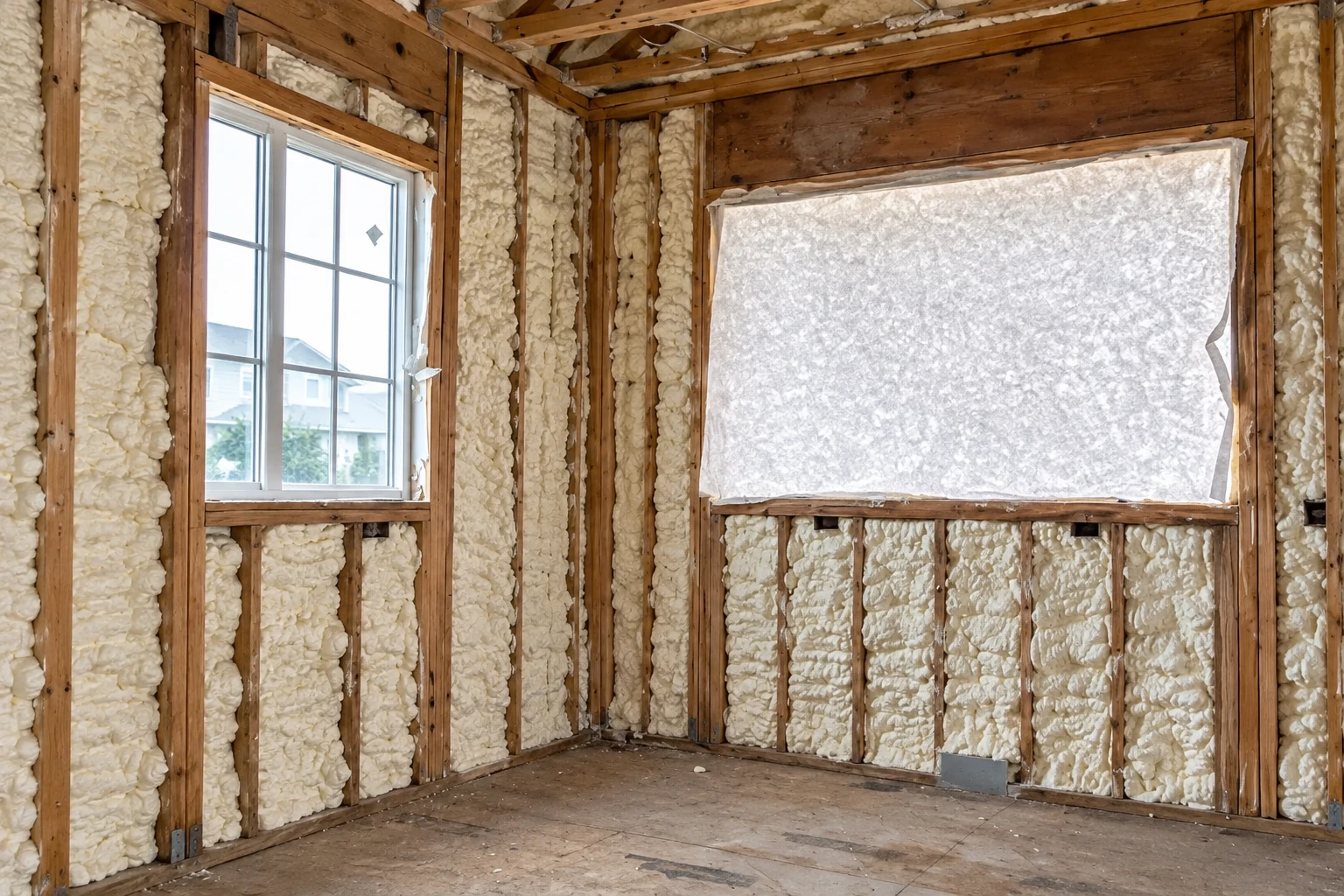
Spray foam insulation
Spray foam seals air and insulates in the same pass, so it suits rooflines with ductwork under them and tight spots loose fill can't reach. It costs more, and I'll say so when a cheaper fix will do.
R&S Hesperia Insulation Company is an insulation contractor based in Hesperia, CA, and we insulate attics, walls, crawl spaces and shops in Adelanto, sealing the gaps and fixing what's wrong before new insulation goes in.
Adelanto is a High Desert city in San Bernardino County, near Victorville, and the calls we get from here sound like the ones we get everywhere else around us. A room over the garage that won't cool down, cold floors over a crawl space, a power bill that keeps climbing. We're based in Hesperia and do the same work from Victorville out to Piñon Hills, so Adelanto houses get the same prep and the same crew.
What moves the price is what's already up there: how many inches you have, whether any of it is wet or full of droppings and has to come out first, how many gaps need sealing, how easy the attic is to get into, and whether you want foam or loose fill. The schedule turns on the same things, plus the wait before you can go back inside after a foam job. You get your own figure from the estimate, which I write after I've been up there myself.
Foam costs more and seals air while it insulates. In most attics I'd rather seal the gaps and top up the loose fill, because that gets you most of the way for less money. The exception is when your ductwork runs through the attic, and then foam usually earns what it costs.
I'm the one who looks at your house and writes the estimate, our own crew does the install, and I check the work before we leave.
If I find a roof leak or a bad wire in the attic, we don't insulate over it until it's fixed, because new insulation would just hide the problem.
I started working my dad's insulation jobs as a kid and opened this business in Hesperia in 2013, and we still do the work in the order he taught me.
Spray foam seals air and insulates in the same pass, so it suits rooflines with ductwork under them and tight spots loose fill can't reach. It costs more, and I'll say so when a cheaper fix will do.
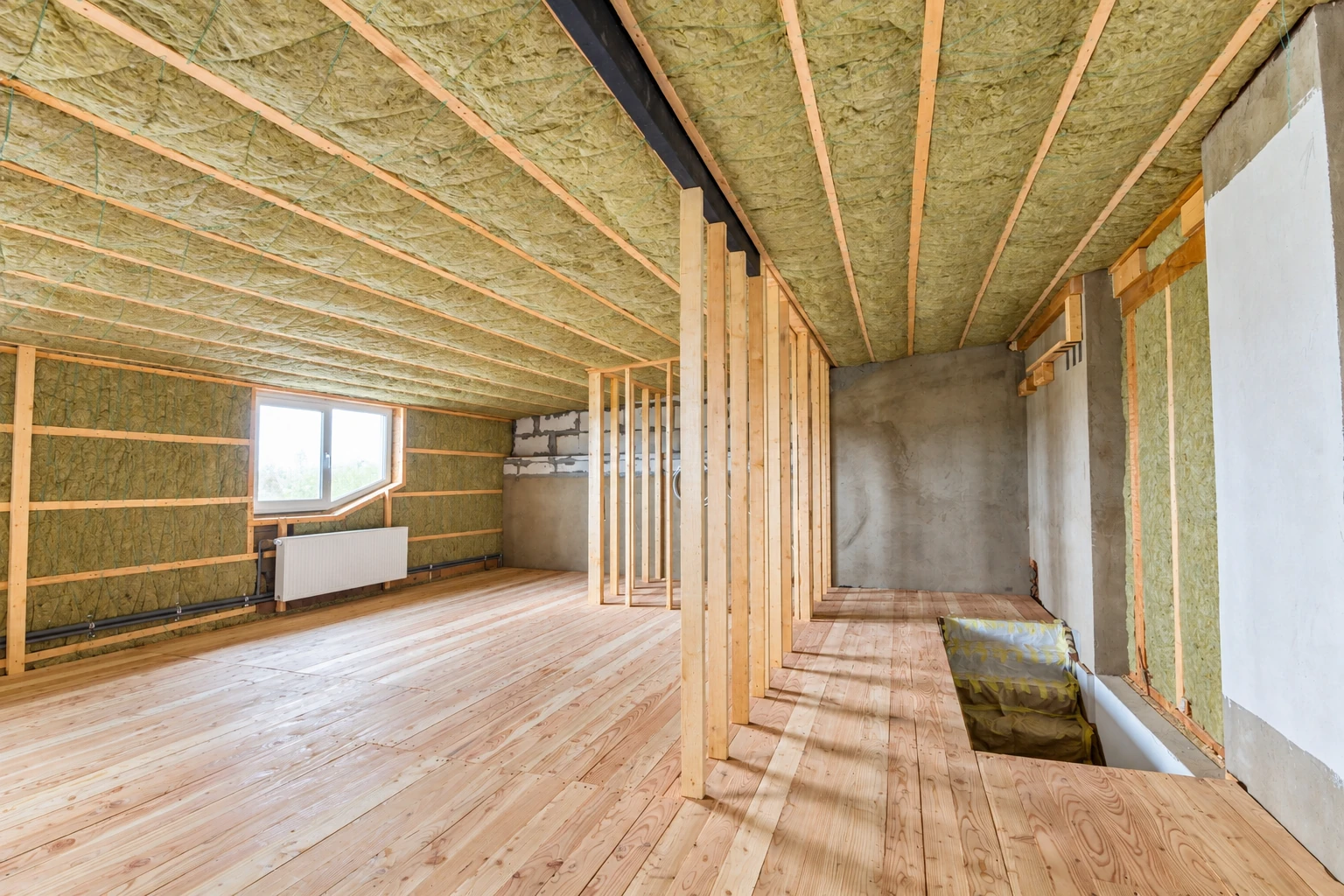
Most hot-room calls start in the attic. We check how many inches you already have, seal the gaps, keep the eave vents clear so the attic can breathe, then add what's missing.
Blown-in is loose fill blown through a hose, and it's how we top up most attics because it settles in around joists and wiring. We build the edges up as deep as the middle, where thin spots usually hide.
When the whole house feels uneven, I look at the attic, walls and crawl space before deciding where your money does the most, and I'll tell you what can wait.
Insulation that's been soaked or is full of droppings has to come out before anything new goes in, or the problem stays put. We bag it, clean out the attic and look at the framing underneath.
Cold floors usually trace back to the crawl space below them. We fit insulation between the floor joists and seal around the pipes coming up through the floor, so the room above stops losing heat downward.
Older houses often have thin or empty walls. We fill closed walls through small openings we patch afterward, or put in batts while the walls are open during a remodel.
Air sealing, closing the small gaps where house air slips into the attic and walls, comes first on our jobs, because insulation can't stop a draft that's moving straight through it.
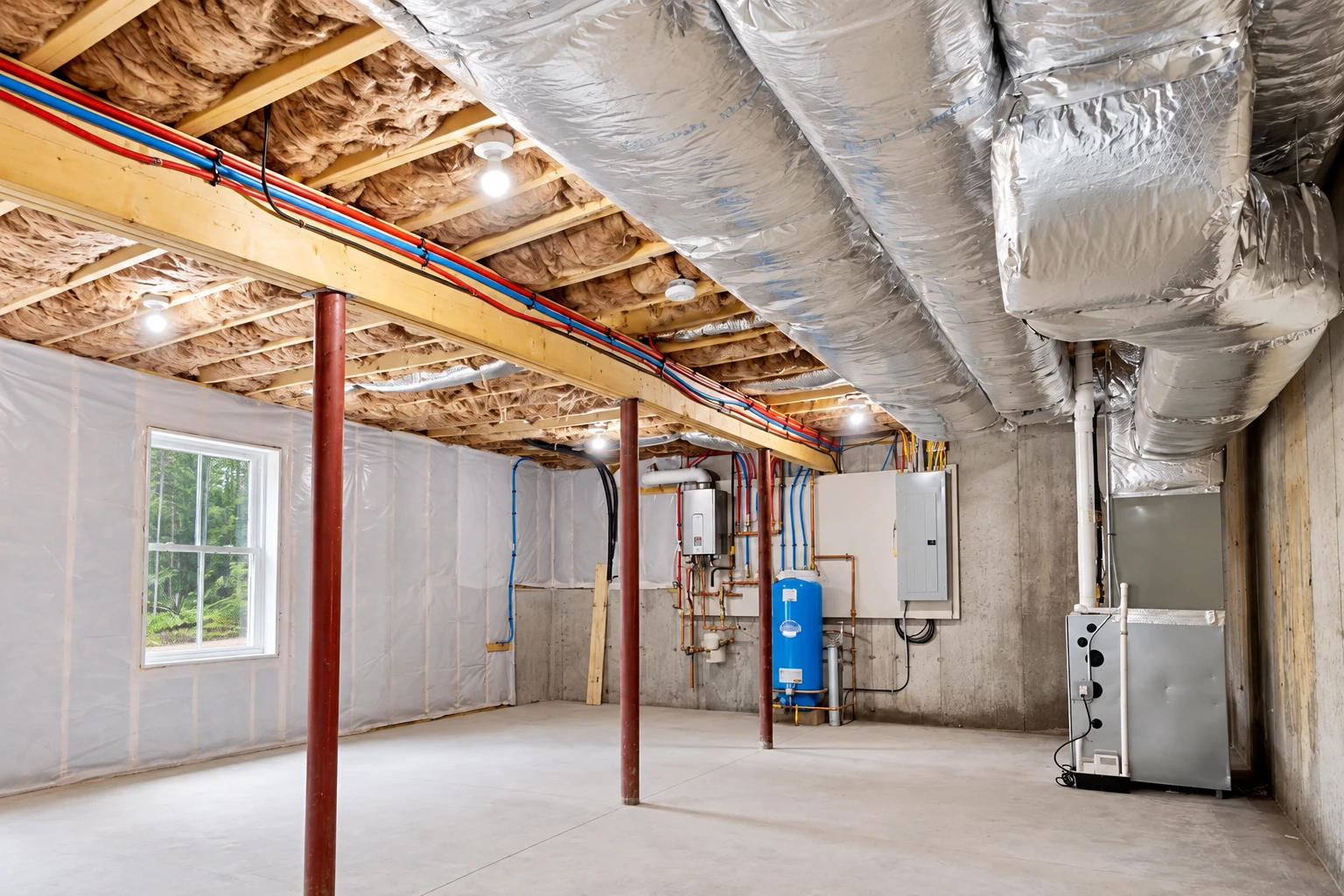
If your house has a basement, we insulate the walls and the rim joist, the band of framing that sits on the foundation, so the space holds its temperature instead of chilling the floor above.
Closed-cell foam is dense foam that also blocks moisture, so we use it where damp is the worry, like a crawl space wall or a rim joist. It costs more than open-cell, and it's worth it there.
Open-cell foam is softer and lighter than closed-cell and still seals air, so it's a good fit on an attic roofline over ductwork, where moisture isn't the main concern.
Shop and building owners call us when a space won't hold its temperature. We look at the roof, walls and doors, then seal and insulate in the order that fixes the cause, not just the symptom.
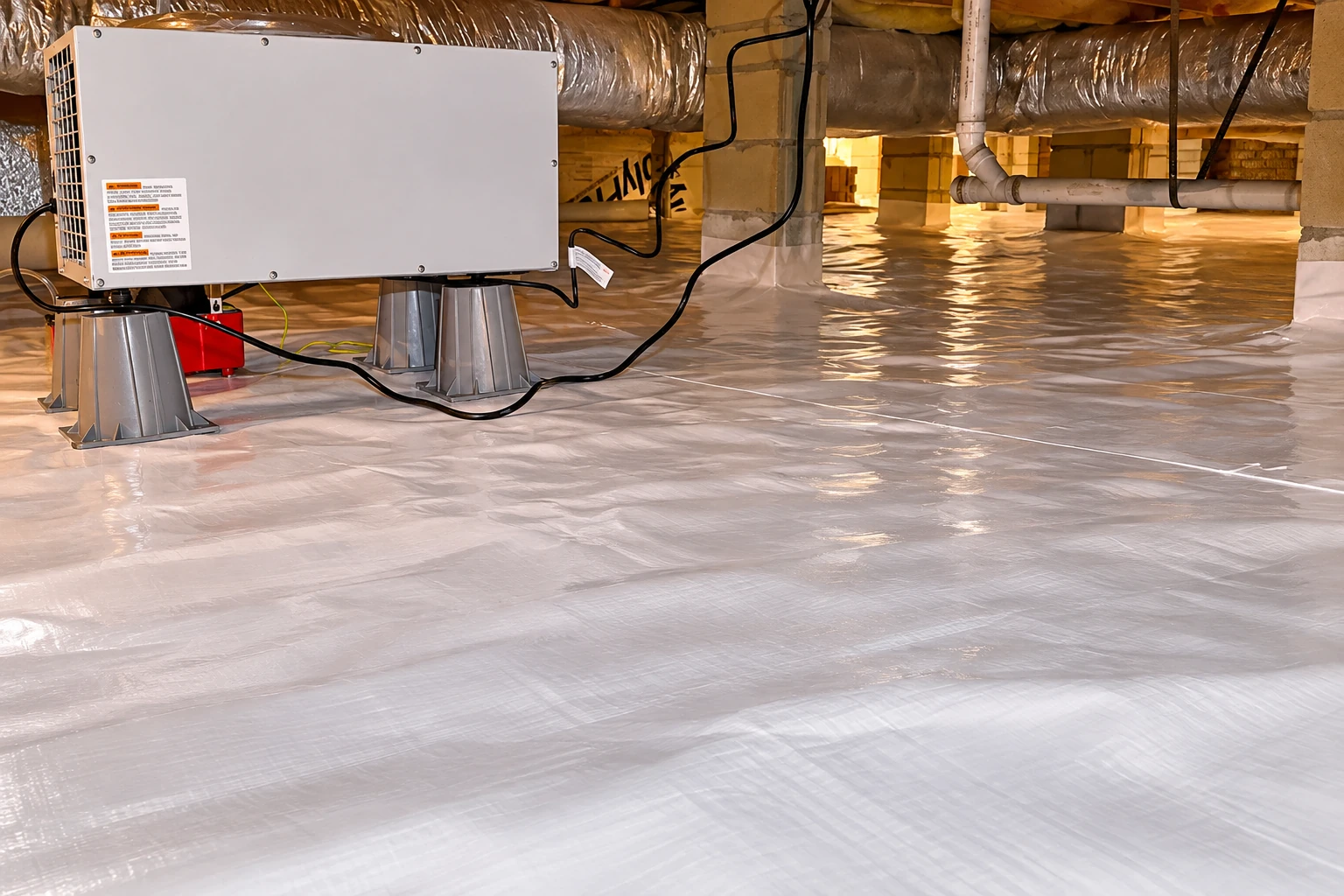
We lay heavy plastic sheeting over the crawl space dirt, overlap and seal the seams, and run it up the walls, so ground moisture stays out of the joists and the insulation above.
We put vapor barriers behind insulation in walls, ceilings and floors where a house needs one, and leave them out where they'd trap moisture in the framing instead of keeping it out.
Before new insulation goes on the attic floor, we seal around can lights, plumbing pipes, wiring holes and the hatch, so the fill isn't fighting air pushing up from the rooms below.
Retrofit work adds insulation to a house that's already finished and lived in. We work through the attic, the crawl space or small wall openings, cover the floors we walk across and clean up before we go.
Send the form and we'll reply within one business day to set a time for me to come out. I look at your attic or crawl space, then write a free estimate with no obligation.
If your attic already has enough and the gaps are sealed, I'll tell you that you don't need us yet, rather than sell you a job that won't change the bill.
We're licensed and fully insured, and the people in your attic are our own crew, the same ones I hand the job to after I've written the estimate.
That's our promise on every job, and the estimate spells out what we'll seal, remove and add, so you know what you're getting before our crew starts.
Here are the questions I hear most about permits, licenses and what an insulation job means for your house in Adelanto.
The city's list of work that can skip a building permit doesn't settle it for insulation, so check with the City of Adelanto before work starts. That list covers things like small sheds and finish work such as painting, tile and cabinets, and insulation isn't on it. When your job calls for a permit, we handle the paperwork and set up the inspections.
A contractor needs a license from the Contractors State License Board when the job needs a building permit, uses any additional workers or costs $1,000 or more in labor and materials, and they need it before they bid. A bigger job can't be split into pieces under $1,000 to get around that. We're licensed and fully insured.
Usually not for blown-in or batts, because the work stays up in the attic and you can go about your day below. Spray foam is different. It has a re-entry time, the wait before you, the kids and the pets can come back inside, and I'll tell you how long that is for your job before we schedule it.
Only if the old insulation is dry and clean. If it's been soaked by a leak or is full of droppings, it has to come out first, because new material on top just buries the problem. When I'm up there for the estimate, I check what you have and how many inches, and tell you which way to go.
These are the cities with their own page on our site, and we work in others around Hesperia too, so call or send the form if yours isn't listed.
Call (760) 713-8598 any day, 7 AM to 11 PM, or send the form and tell us which room bothers you most.